Guides
White Willow (Salix alba) Guide: Growing, Variants, Cuttings and Harvesting the Bark
How to grow white willow from cuttings, where it thrives, how to cut it back, when to harvest the bark, and what the bark has and has not been shown to do.
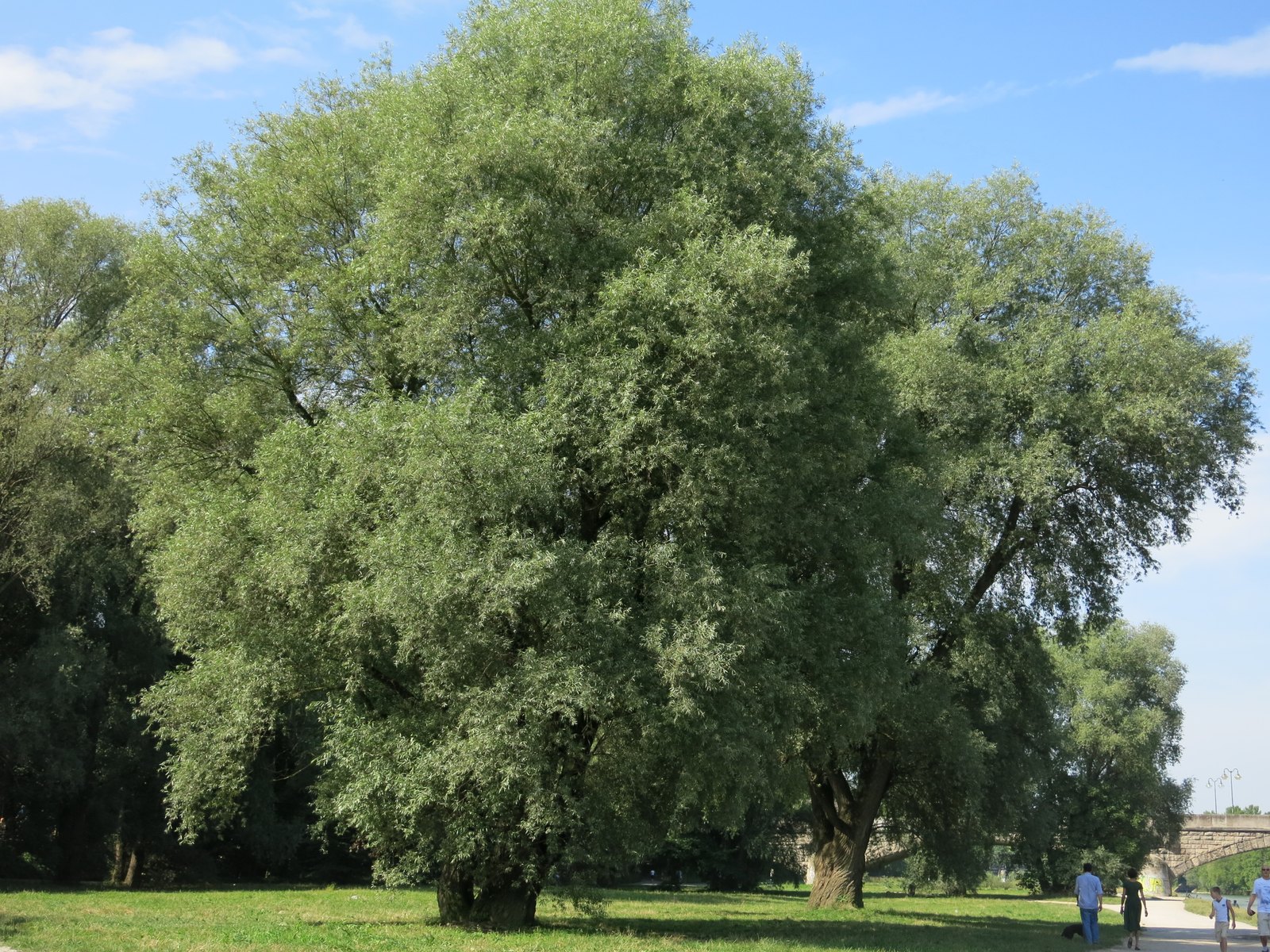
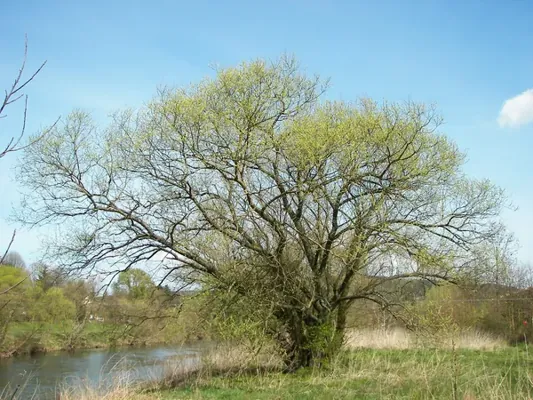
Photograph: Burkhard Mücke, CC BY-SA 4.0. Source: Wikimedia Commons

On this page
Introduction
A willow branch pushed into wet ground in winter will often be rooted and leafing out by summer. No other tree we know roots as easily, and that one habit explains why people have grown white willow beside rivers, ponds and ditches for thousands of years. You plant a stick, keep its feet wet, and wait.
White willow, Salix alba, gives you silvery leaves, fast growth and a bark that has been used as medicine since long before aspirin existed. This guide covers where it grows, how to root it from cuttings, how big it gets, how to cut it back so it stays useful, what else the tree is good for, and how and when bark is gathered. It also says plainly what the bark has been shown to do and what it has not.
Summary
- Grow it: in full sun, in moist to wet soil, in USDA zones 3 to 8. It cannot grow in shade and it dislikes dry, thin ground.
- Start it: from a cutting. Hardwood cuttings go in from November to February, half-ripe cuttings from June to August.
- Give it room: an unpruned tree reaches 50 to 70 feet, spreads 40 to 70 feet, and has aggressive roots that can damage drains.
- Cut it back: willow responds well to pollarding and coppicing, and the rods you remove are your next cuttings.
- Harvest bark: in spring or early autumn, from branches 3 to 6 years old, then dry it.
- Know the limits: the bark is the classic source of salicin, but no study shows it helps with weight loss, and it carries the same cautions as aspirin.
Why does the bark matter at all? The inner bark holds salicin, a compound the body converts into salicylic acid, the relative of the aspirin molecule. That chemistry is the reason willow became famous, and it is also the reason the bark comes with real cautions that this guide spells out.

The sections below follow the tree through its life: what it is, how to grow it, what you can make from it, how the bark is harvested, and what the evidence says about using that bark.
Complete guide to turmeric cultivation covering Curcuma longa rhizome propagation, tropical growing requirements, curcumin extraction.
For a More In-Depth Read, Click HereWhat White Willow Is
The tree
White willow is a medium to large deciduous tree. In the wild it reaches 33 to 98 feet, and the trunk can grow up to 3 feet across with an irregular, often leaning crown. The bark is gray-brown and deeply fissured in older trees, while the young shoots are gray-brown to green-brown.
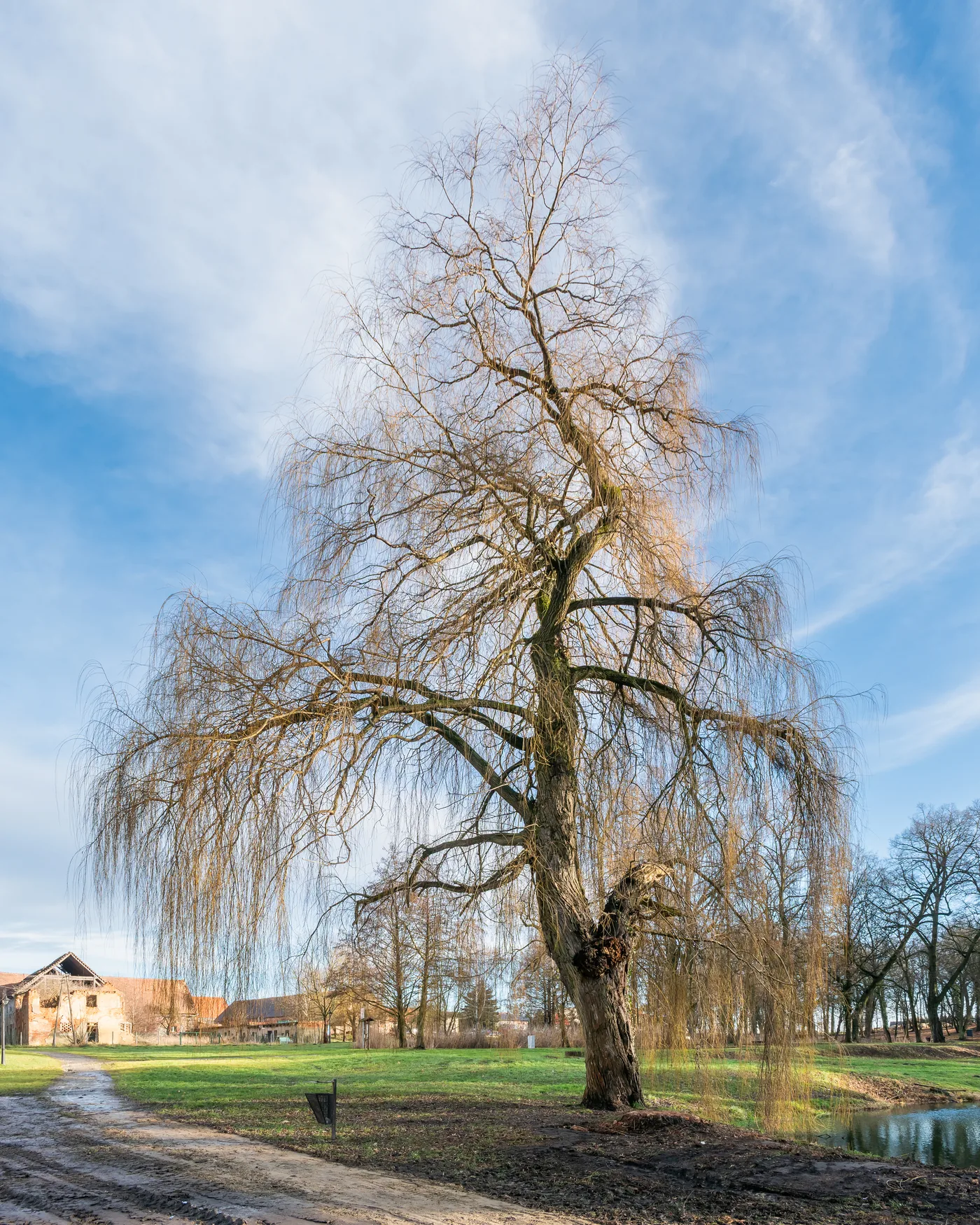
The leaves give the tree its name. They are 2 to 4 inches long and under an inch wide, narrow and finely toothed, and fine white hairs on the underside make them paler than the leaves of most willows. When wind turns the foliage over, the whole crown flashes silver.
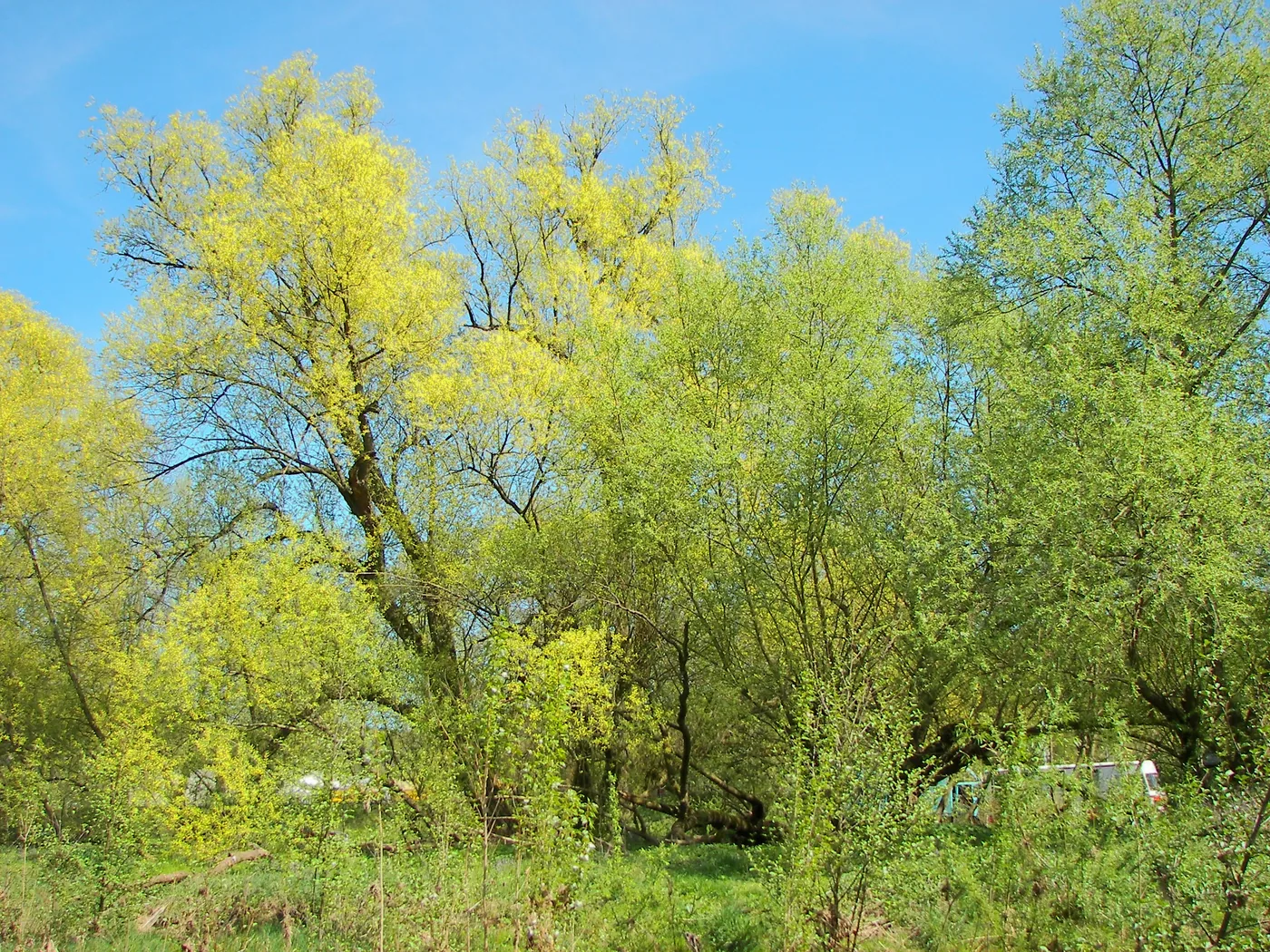

An open-grown tree is multi-stemmed and erect, and it grows fast. Plan for 50 to 70 feet of height and 40 to 70 feet of spread. The wood is brittle, so limbs split in storms, and the roots are wide and shallow, so the tree wants an open site with no pipes or foundations nearby.

Size is the first thing to plan for. A white willow is not a yard tree in the usual sense, and the sections on pruning below show how growers keep it to a size they can manage.
Flowers and seed
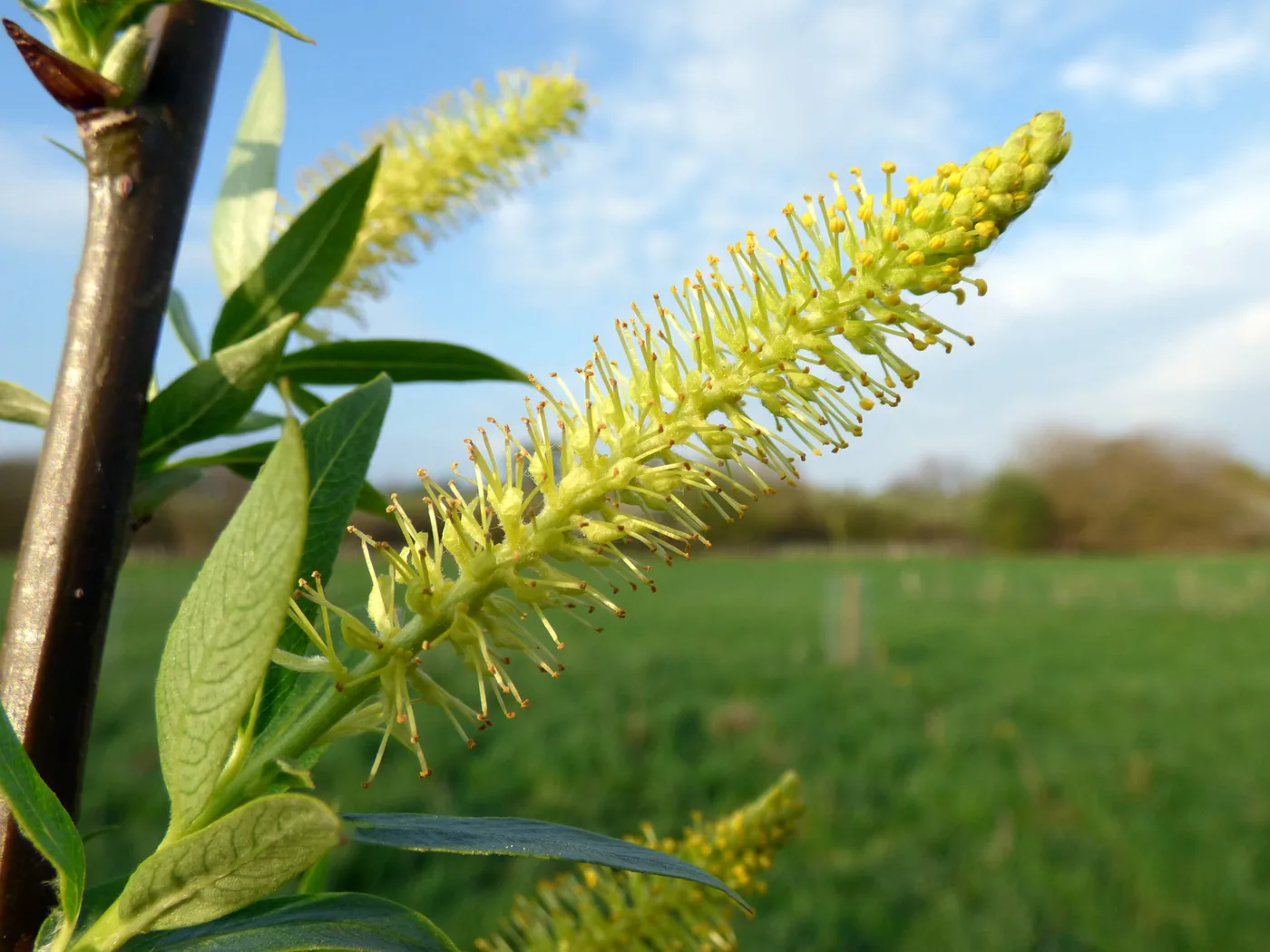
White willow is dioecious, which means male and female flowers grow on separate trees. Both open in early spring as catkins, the soft, caterpillar-shaped clusters you see on a willow before the leaves. Male catkins run 1.6 to 2 inches long and female catkins 1.2 to 2 inches at pollination, lengthening as the fruit matures.
Bees do the pollinating, and the tree cannot pollinate itself, so you need both sexes nearby to get seed. By midsummer each female catkin holds many small capsules about 0.16 inch long, and every capsule holds minute seeds wrapped in silky white hair that carries them on the wind.
Seed is not the practical way to grow willow. It stays alive for only a few days after it ripens, so a cutting is faster, easier and certain to be the sex you chose.
Where it comes from
White willow is native to Europe, western and central Asia, and North Africa. You will usually find it in wet or poorly drained soil at the edges of pools, lakes and rivers, where its wide-spreading roots draw moisture from a large area. The tree is fast-growing and relatively short-lived, so an old one is often hollow and a young one is already working to replace it.
It crosses freely with crack willow, Salix fragilis, and the hybrid is called Salix × rubens. Because of that, a tree sold as white willow is sometimes a hybrid, and many of the named forms are selections of one kind or the other.
| Form | What it is |
|---|---|
| Cricket-bat willow (Caerulea) | Very fast, with a single straight stem, grown as a specialist timber crop in Britain |
| Golden willow (Vitellina) | Shoots stay golden-yellow for one to two years, and cutting back every two to three years improves the color |
| Golden weeping willow | A hanging form that is still the best choice in very cold regions such as Canada, the northern United States and Russia |
For a medicine garden the plain species is the safest choice, because it is the plant that the old bark records describe.
A short history of use
Willow is often called the oldest recorded pain remedy. It appears in ancient Egyptian and Greek medicine, and Hippocrates, Dioscorides and Galen recommended it for fever and pain. Chinese physicians are recorded using it from about 500 BC.
Closer to home, Cherokee healers drank a bark infusion to check the bowels and for fever, took an inner-bark decoction for hoarseness, and laid bark on the skin as a poultice. In Europe, a clergyman named Edward Stone reported in 1763 that dried willow bark powder helped people with fevers.
The chemistry came later. In 1828 two chemists, Henri Leroux and Raffaele Piria, crystallised salicin from willow bark, and salicylic acid is a derivative of it. Aspirin was then made from salicylic acid, which is why the story of the tree and the story of the pill are told together.
Growing White Willow
Ideal growing conditions
Willow wants what a riverbank gives it: full sun and constant moisture at the roots. Get those two right and it forgives almost everything else.
| Requirement | Ideal |
|---|---|
| USDA hardiness zones | 3 to 8 |
| Light | Full sun; it cannot grow in shade |
| Water | Moist to wet, and it tolerates poorly drained or flooded ground |
| Soil | Light, medium or heavy; sand, loam and clay all work |
| Soil pH | Mildly acidic to neutral |
| Poor soils | It dislikes thin, poor ground and rarely thrives on chalk |
| Mature size | 50 to 70 feet tall, 40 to 70 feet wide |
| Spacing | More than 60 feet from the next tree |
| Growth rate | Fast |
Water is the number to watch. A willow in dry ground drops leaves and stalls, while the same tree beside a pond or in a low wet spot grows faster than you expect.
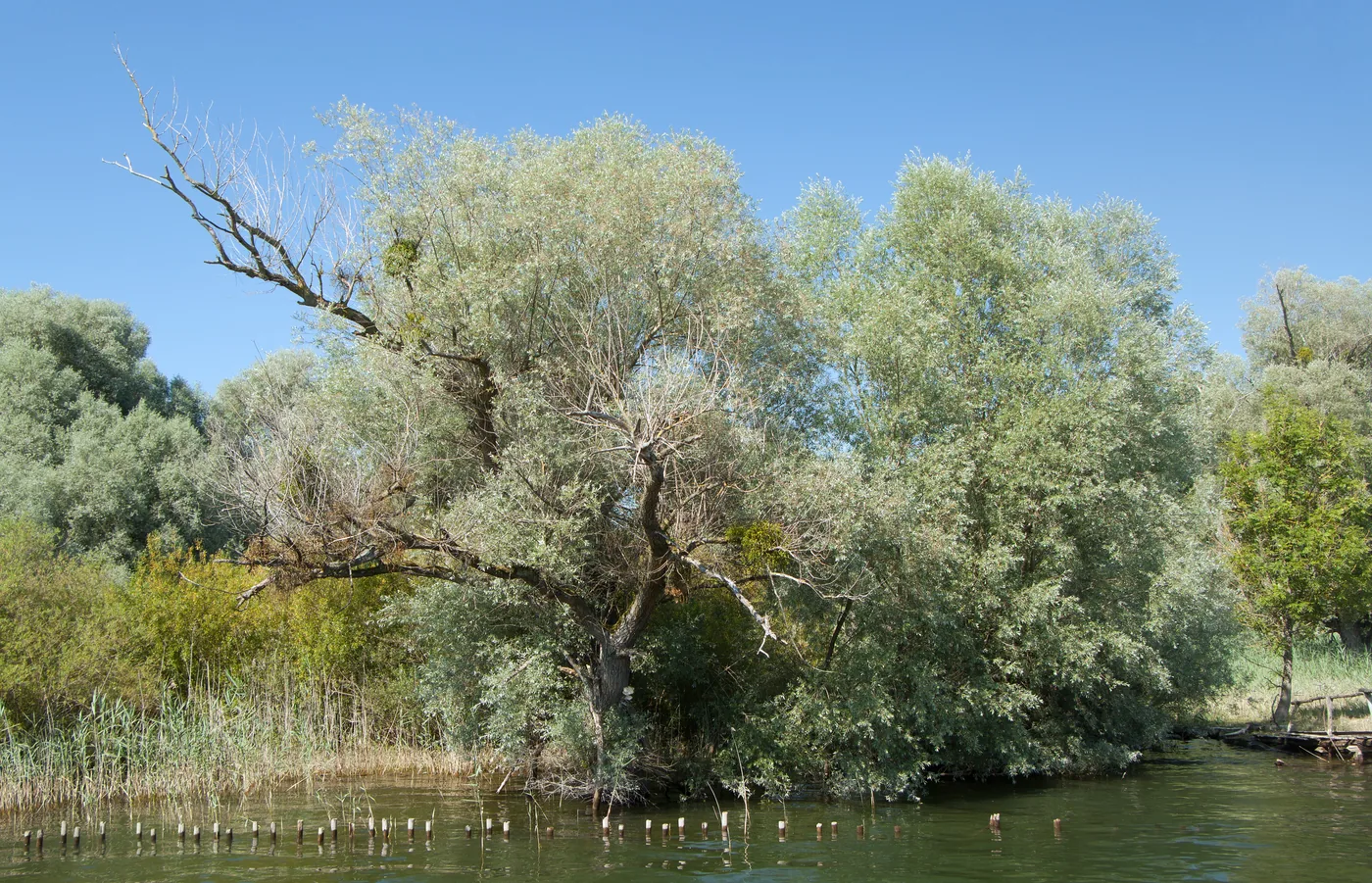

Willow also shrugs off a lot that stops other trees. It tolerates wind, salt air and city air pollution, and its crown casts only light shade, so grass and other plants can grow beneath it.
Choosing a site
Choose the lowest, wettest, sunniest corner of your land. The edge of a pond, a drainage ditch, a seep or the bank of a creek is ideal. Keep the tree well away from septic fields, wells, drain lines and buildings, because the root system is aggressive and can damage drains.
Plant it where falling limbs can do no harm. Brittle wood and a big crown mean branches will come down in wind, so a spot over a driveway or a roof is a poor choice.
Plant it once. Willow transplants poorly unless it is moved regularly, so set a cutting where you want the tree to stay.
Growing from cuttings
Cuttings are the way to grow willow, and growers describe the method as very easy. A piece of stem makes roots almost anywhere it is kept wet. You have two timings to choose from.
| Cutting | When | What you take |
|---|---|---|
| Hardwood | November to February, while the tree is dormant | Mature, leafless wood from last year or older |
| Half-ripe | June to August | Firming, current-season shoots, kept in a frame or shaded bed |
Hardwood is the easy route. Cut straight lengths of dormant wood about 21 inches long, because 21 inch cuttings did best in a trial with black willow, a close relative. Choose stems between 1 and 3 inches thick when you want a tree that reaches the water table quickly, and make the bottom cut at an angle so you always know which end goes down. Cuttings up to 8 feet long can be used where the water table is deep.
Before planting, soak the cuttings in water. Anywhere from 3 to 14 days works, and they will often show the first root bumps while they soak. Then push each one into the ground, buds up, until only a few inches of stem stand above the soil. Firm the soil around it and water it in.
What if the ground is dry on top? Plant deeper. The cutting only needs its lower end to reach constant moisture, and a longer cutting set deeper is the simplest way to get there.
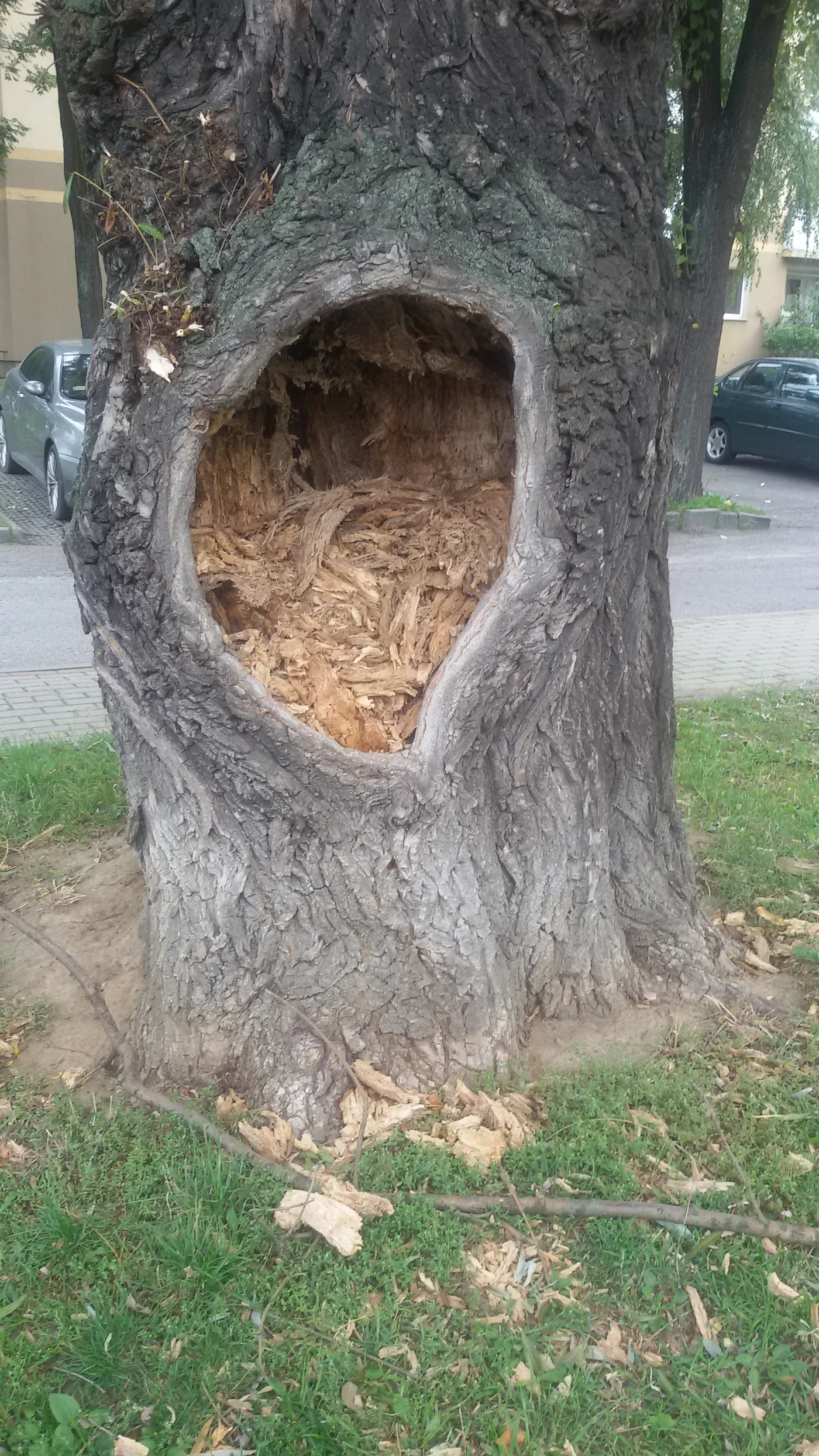

The bark of willow contains indole-3-butyric acid, a root-growth hormone, which is why growers sometimes use willow trimmings in place of a commercial root stimulator when they clone other plants.
Care through the first years
Keep the soil wet through the first summer and mulch around the base to hold water in and keep grass back. After that the tree takes over. By its second year its roots have found their own water and the job is mostly pruning.
Willow needs little feeding in wet, rich ground. If growth is weak, the cause is nearly always dry soil or shade, so move water to the tree before you add fertilizer.
Pruning and cutting back
An uncut willow grows huge and sheds limbs, so most growers cut it back on a schedule. Willow responds well to both of the common methods, and each one gives you something to use.
- Pollarding: cut every branch back to the same knuckle on the trunk, several feet off the ground, every few years. The tree sends up a crop of straight rods and stays small enough to manage.
- Coppicing: cut the whole tree to a low stump. The stump regrows many stems, which suits a thicket for baskets, stakes or bark.
Pollarding keeps new growth above the reach of grazing animals, while coppicing suits a thicket where you want many stems at once.
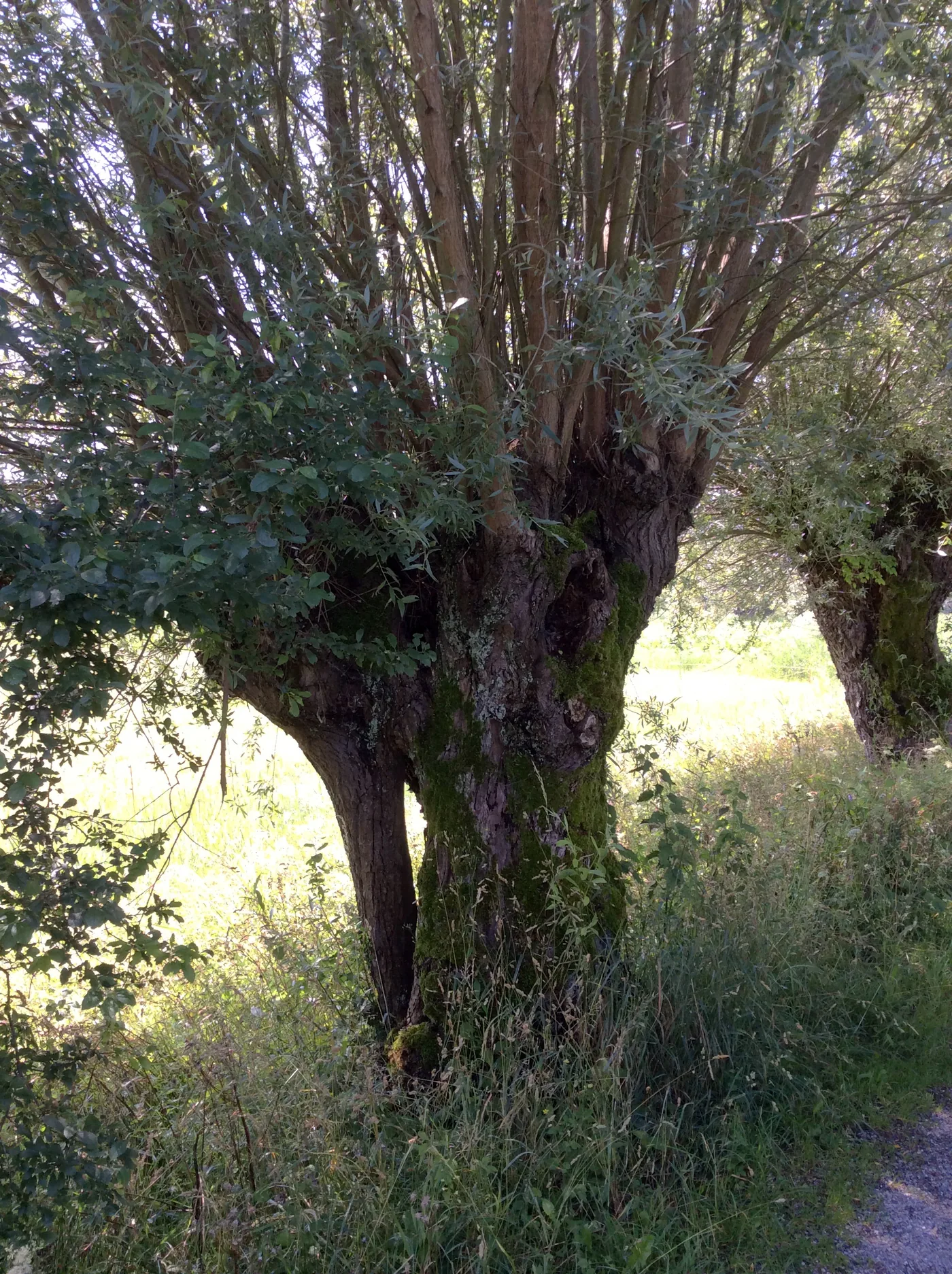

How often you cut depends on what you want. Basket makers coppice annually for thin, flexible rods, or every two years for thick poles, and golden willow gives its best shoot color when it is cut every two to three years. Cut in winter while the tree is dormant, and keep the rods, because they are your next batch of cuttings.
Pests and diseases
Willow is tough, but two diseases are worth watching for. Watermark disease is caused by the bacterium Brenneria salicis and stains the wood, and willow anthracnose is caused by the fungus Marssonina salicicola. Either can be a serious problem for trees grown for timber or ornament.
Sound, well-watered trees resist best. A tree in a sunny, wet site and cut back on schedule is rarely the one that gets sick, and a diseased limb should be cut out and removed from the site.
Variants Worth Growing
White willow, Salix alba, is the tree this guide grows, but a grower asking which willow to plant is really asking three things: which one gives the most wood, which one holds the most salicin in its bark, and which one takes the cold best. The answers come from three different studies on different sites, so read them as a ranking and not as a promise.
| Question | Variant | Why |
|---|---|---|
| Top Yielding | Salix schwerinii, a Siberian species grown as short-rotation coppice | In a three-year New Zealand trial it gave 12.19 oven-dry tonnes per hectare, against 9.25 for S. purpurea and 8.87 for S. viminalis. That is whole stems and not bark, and neither white willow nor violet willow was in that trial. |
| Highest In salicin | Violet willow, Salix daphnoides, and its hybrid with purple willow | In a Polish trial, bark from annual shoots harvested in November held the most phenolic glycosides, measured as salicin, in S. daphnoides and in the S. daphnoides by S. purpurea hybrid, and the least in S. alba. |
| Hardiest | White willow itself, Salix alba | Missouri Botanical Garden rates it for USDA zones 2 to 8, colder than purple willow, S. purpurea, which the University of Illinois database lists at zone 3b. Its weeping form Tristis is rated for zones 4 to 8. |
| Varieties of white willow | Vitellina (golden willow), Tristis (weeping) and Caerulea (cricket-bat willow) | They differ in shoot color, shape and timber, and we found no measurement of their bark salicin, so choose them for form and hardiness and not for the bark. |
White willow is the right start for a cold site and for a tree you also want as shade and shelter, and violet willow is the one to consider when salicin is the goal.
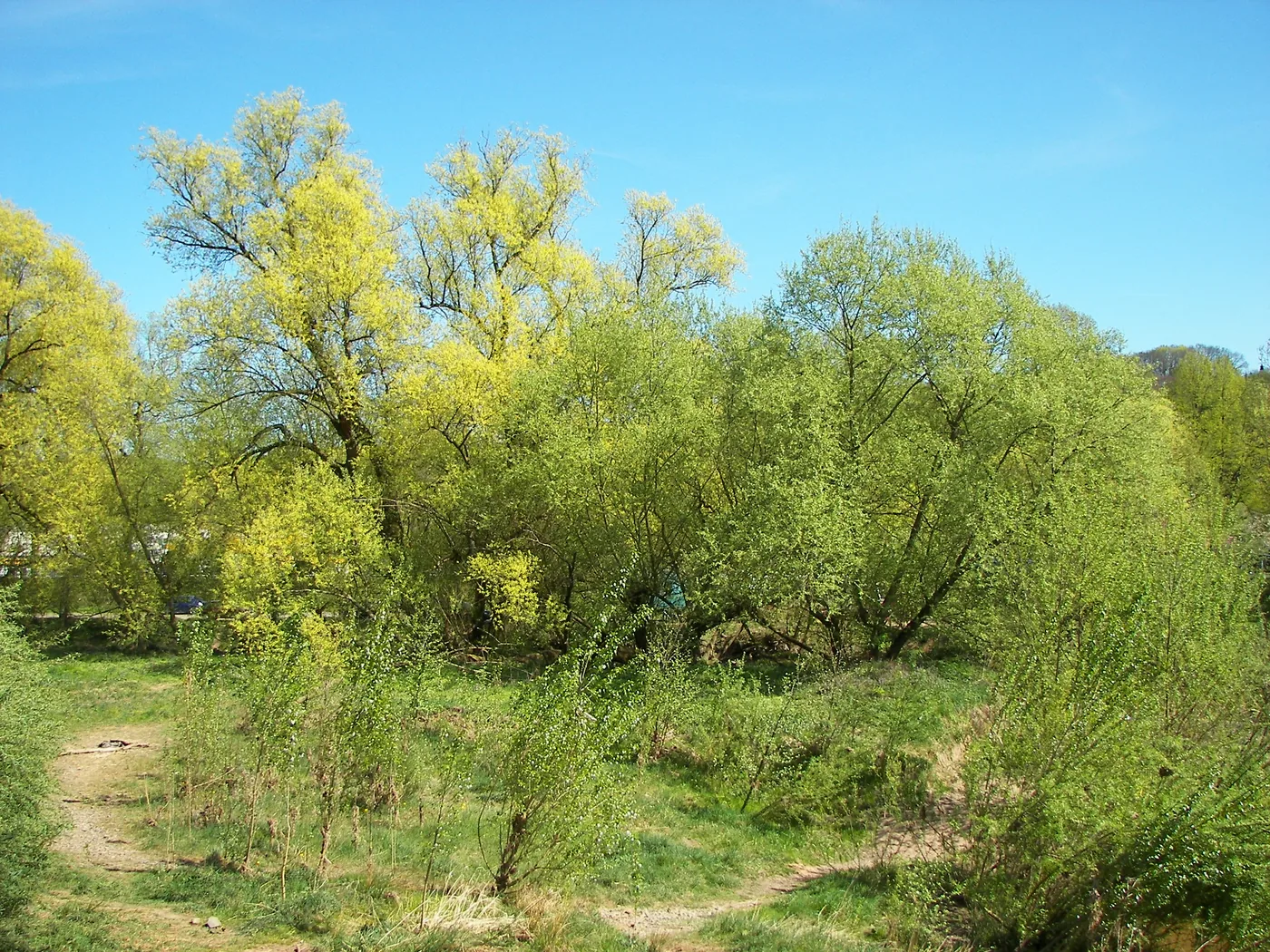

In a German study of clones, the species, the clone and the harvest time each changed the salicylate content, so buy a named clone and not a random cutting if bark chemistry matters to you.
Growing For Bark and Cuttings
A willow is grown for two crops that suit each other, the bark and the cuttings that make new trees, and the work that raises one mostly raises the other. What changes is how you cut. A tree left alone gives one thick trunk and little useful bark, while a tree cut on a schedule gives a steady supply of branches of the right age.
Conditions. Plant in full sun with the roots near constant water. A cutting only needs its lower end in moist soil, and a willow with water at its roots grows the most wood, which is what the bark comes from.
Spacing. Give each tree or stool room to spread so that light reaches every stem. A crowded stool shades its own branches and grows thin ones.
Pruning and coppicing. Bark is gathered from branches 3 to 6 years old, so pollard or coppice the tree and stagger the cuts, leaving some branches to reach that age each year. Cut in winter while the tree is dormant, and keep the rods.
Harvest timing. In a German study of clones sampled from March to July, salicylate content in the bark fell from March to June and again from June to July, and a Polish trial harvested its bark in November. Take bark in spring or early autumn, as the bark section says, and avoid midsummer.
Choosing the clone. The species, the clone and the harvest time each change the bark chemistry, so take cuttings from the tree whose bark you want to repeat. Every cutting is a clone of its parent.
Cuttings. The rods from pollarding and coppicing are the next batch of cuttings. Cut dormant wood about 21 inches long, soak it for 3 to 14 days, and set it buds up so only a few inches stand above the ground.
If you want rods for baskets or stakes instead of bark, cut younger and more often, every one to two years, and plant the thin rods closer together. If you want the leaf or the flower, you do not need to change how the tree is cut.
Complete stinging nettle cultivation guide covering Urtica dioica botany, nutrient-rich leaf harvest, iron and mineral content.
For a More In-Depth Read, Click HereWhat Else the Tree Is Good For
Medicine is only one reason to grow willow. The tree has been a working plant for as long as people have farmed near water, and most of its uses depend on how you cut it.
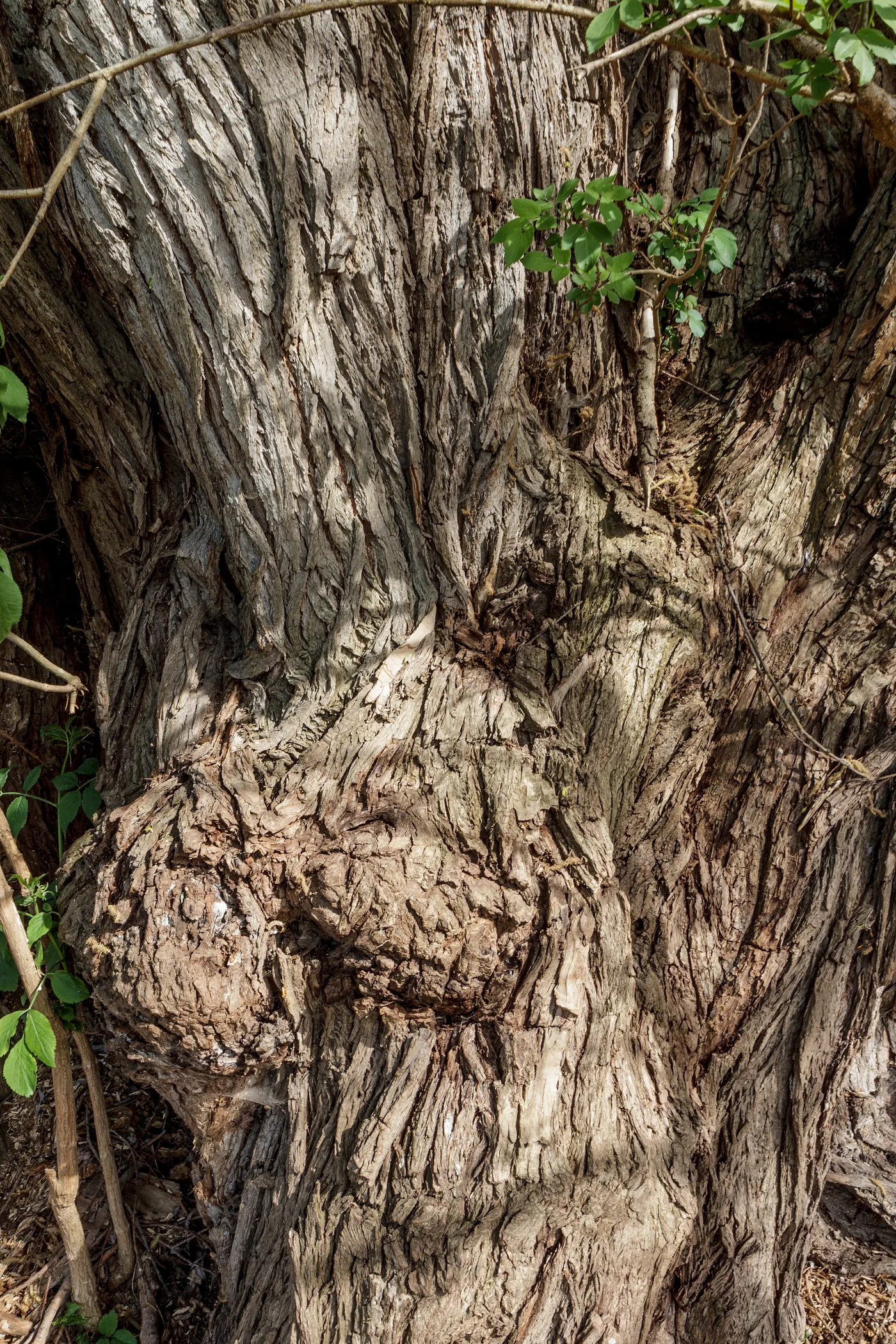

Each use below is a different way of cutting and using the same tree, and several have been practised for centuries.
- Baskets and fencing: the young stems, called withies, are very flexible, and basket makers have used them for centuries.
- Wood: light, tough and elastic, easy to split and resistant to splintering. It is used for poles, tool handles and turnery, though it does not resist rot well.
- Cricket bats: the cricket-bat willow is grown for this one purpose, and its straight single stem is what the bat makers want.
- Charcoal: willow charcoal was once an important ingredient in gunpowder.
- Tanning and fiber: the bark was used in the past to tan leather and the stem fiber to make paper.
- Shelter and pioneer planting: it grows fast and tolerates wind, so it helps establish woodland on difficult ground.
A single tree can do several of these jobs at once if you pollard it, which is one reason old farms kept a few along every ditch.
Wildlife
Few trees do more for insects. White willow is an early bee plant, flowering in April and May when little else has opened, and it is associated with over 200 insect species and is a major food plant for many butterfly caterpillars.
If you keep bees, a pair of willows near the hives, one male and one female, gives them early pollen and nectar. That is a good reason to plant both sexes when you have the room.
Harvesting the Bark
Bark is gathered in spring or early autumn, from branches that are 3 to 6 years old. Younger twigs carry little of the useful chemistry, and old trunk bark is thick and corky.
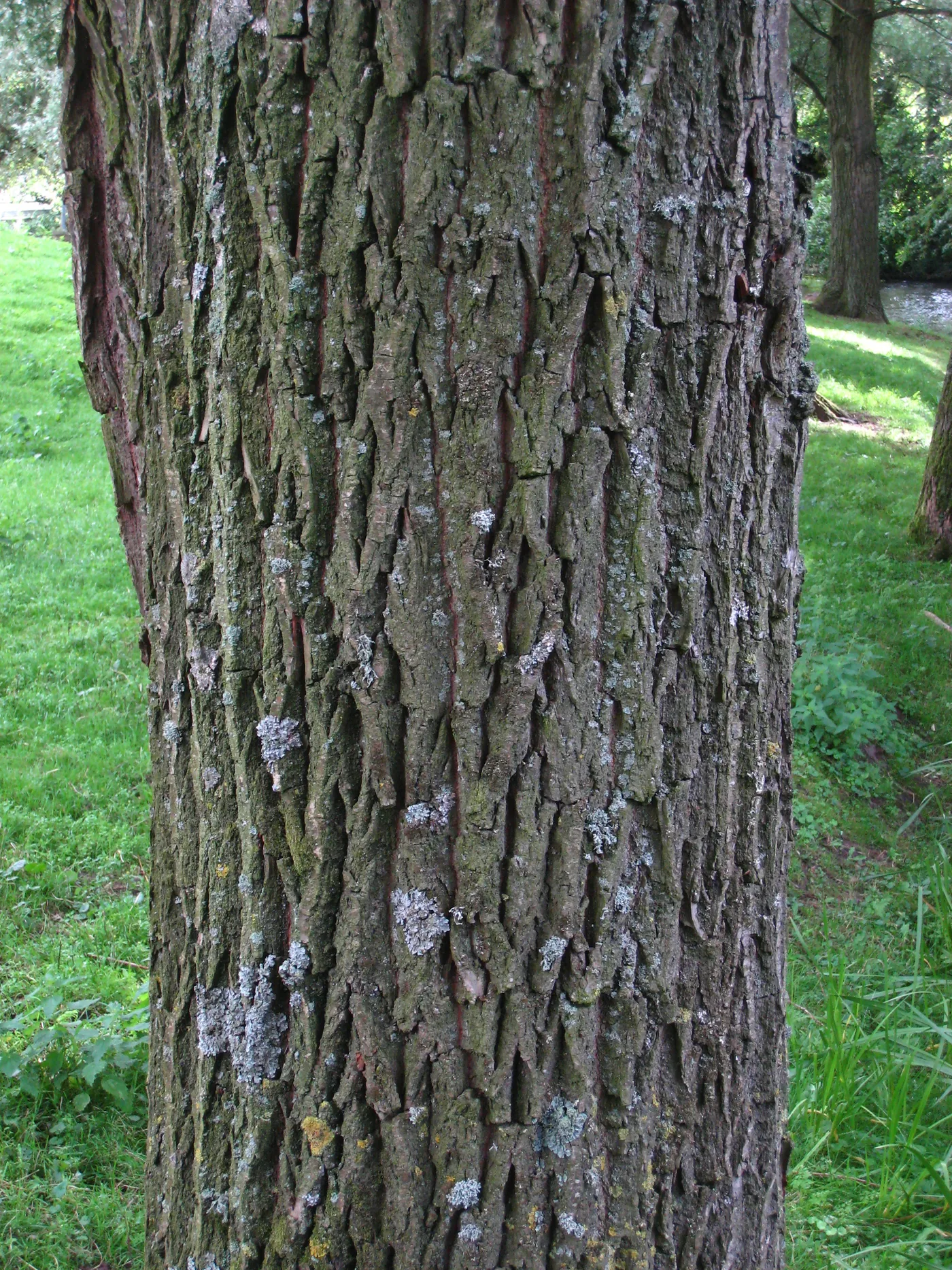

The steps are short, and the only skill in them is knowing which branch to cut.
- Cut a branch of the right age, at least a thumb's width through.
- Strip the outer, rough bark and keep the pale inner layer against the wood.
- Cut the inner bark into short strips so it dries evenly.
- Dry it in a warm, airy place out of direct sun until it snaps rather than bends.
- Store it in a closed jar, away from light, and label it with the date and the tree.
Take bark from branches you were going to prune anyway. Stripping a ring around a trunk can kill the tree, so remove only what comes off the limbs you cut.
The inner bark is also edible in a famine, ground into flour, but it is very bitter and growers use it for medicine rather than food. The leaves make a tea substitute and young shoots can be cooked, though they are not very palatable.
What Is in the Bark
Bark is a mixture. The share of each group of compounds varies with the tree, the branch and the season, and the figures below are the upper limits reported for dried bark.
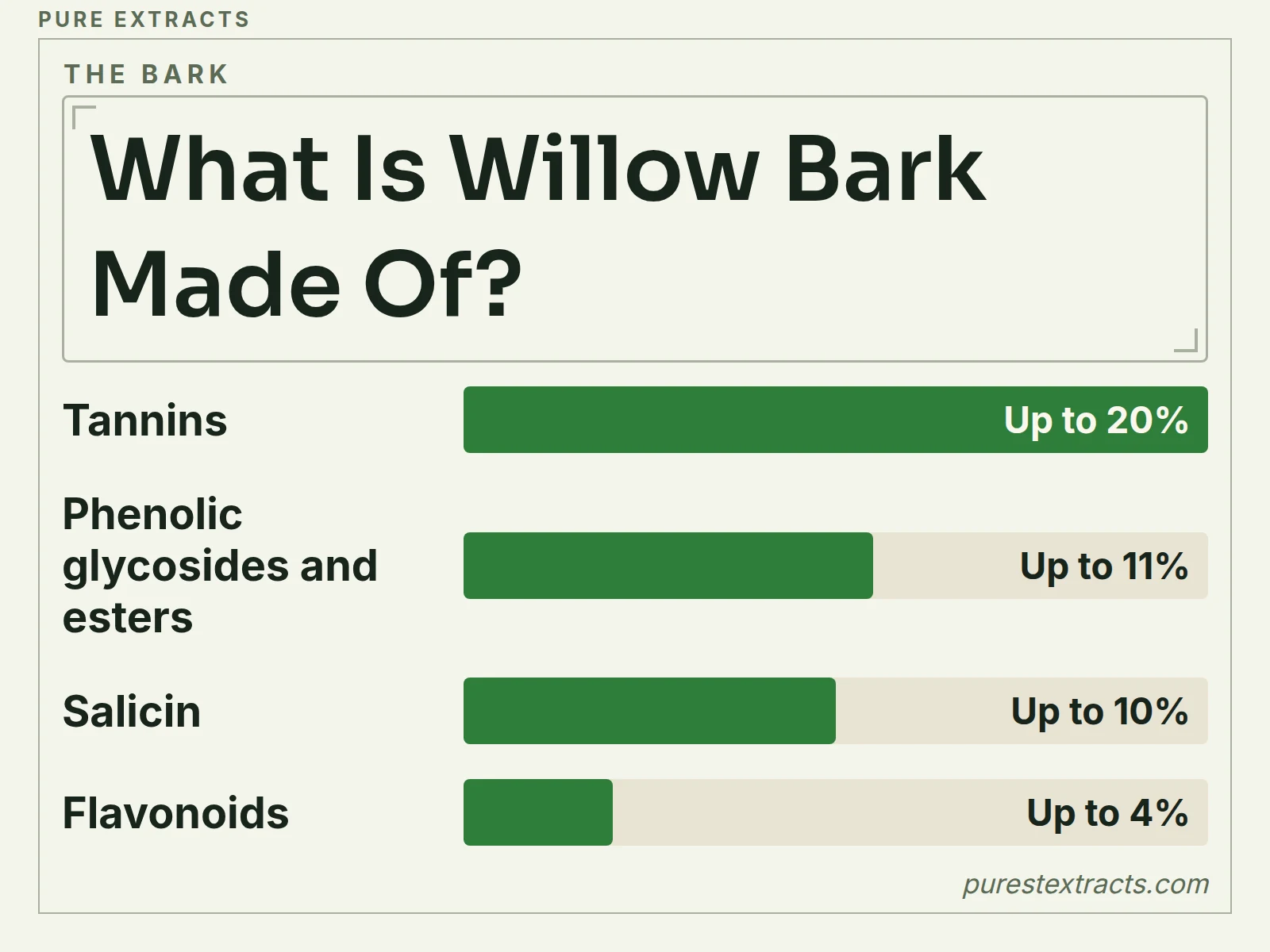
Salicin is the compound that made willow famous, but the bark carries more tannins than anything else. Tannins are astringent, which is why willow bark tea puckers the mouth and tastes so bitter.
Standardized willow bark extracts used in trials contain about 15 percent salicin, a stronger figure than raw bark because the extract concentrates it, and the doses tested ran from 120 to 240 milligrams of salicin a day for up to six weeks.
What the Bark Has and Has Not Been Shown to Do
People have used willow bark for pain, fever and inflammation for a very long time, and the modern record is more modest than the reputation. Here is how the main uses compare.
| Use | What the evidence says |
|---|---|
| Low back pain | Clinical trials suggest a willow bark extract helps |
| Osteoarthritis pain | Results are mixed |
| Rheumatoid arthritis | Results are negative |
| Fever | Thought to act like aspirin; trials have not been done |
| Weight loss | No studies show that it helps |
Willow is often sold for weight loss, and nothing in the evidence supports that. A woman with an aspirin allergy once had a severe allergic reaction to a weight-loss supplement that contained willow bark, so the claim carries a real risk and no benefit. You can set it aside.
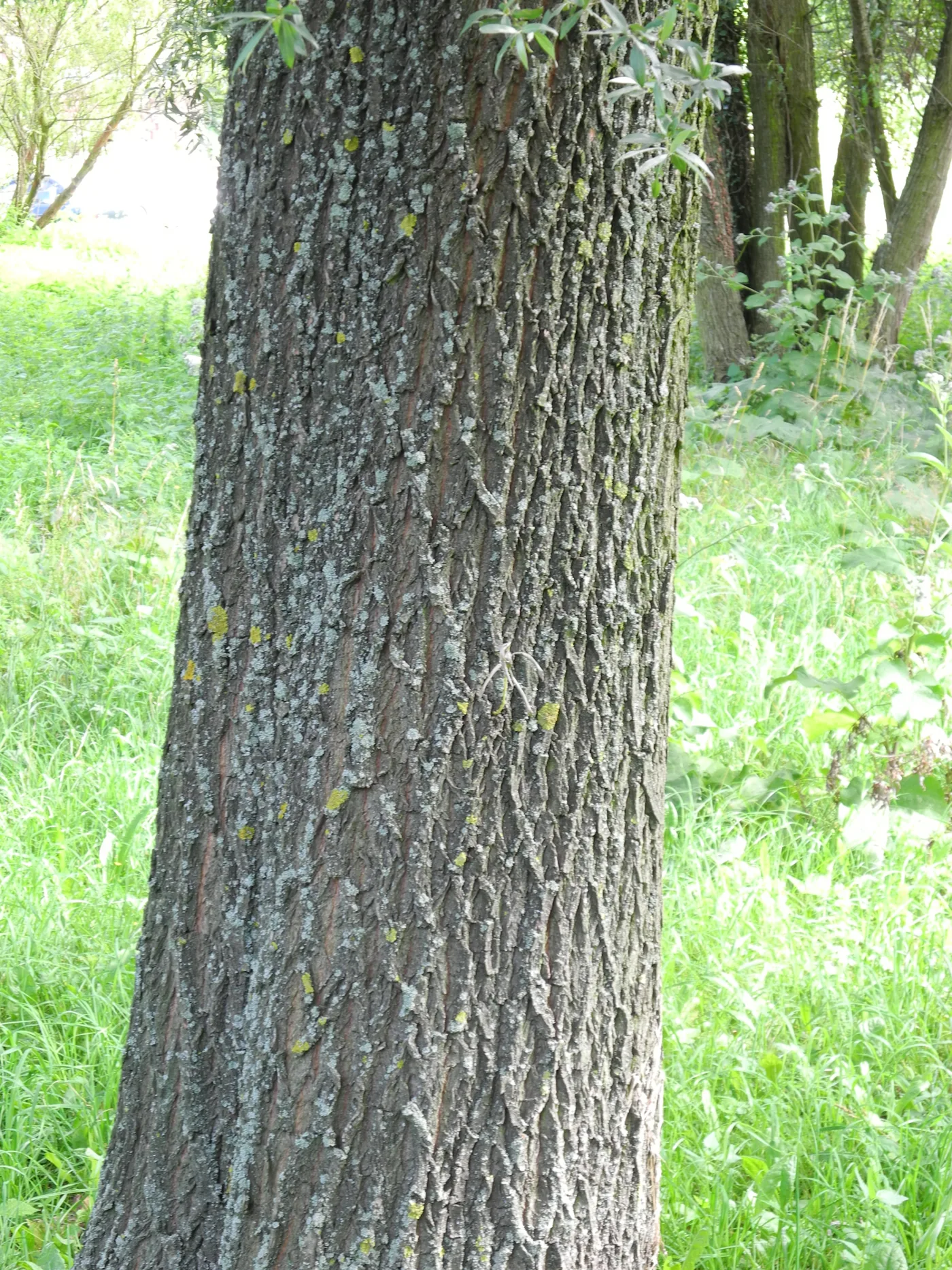

The bark is also not a replacement for aspirin. Its potency varies from tree to tree and batch to batch, and a homemade extract cannot match a measured dose.
Cautions
Salicin behaves like aspirin inside the body, so treat the bark with the same respect. Check these points before you take any willow product.
- Skip it if you are allergic to aspirin or other salicylates, or if you have asthma or have had breathing trouble with aspirin.
- Leave it out during pregnancy and breastfeeding, and do not give it to children, because aspirin is linked to Reye's syndrome in the young.
- Talk to your doctor first if you take warfarin or another blood thinner, since willow can raise the risk of bleeding, and the same applies to anti-inflammatory drugs.
- Stop it before surgery or chemotherapy for the same bleeding reason.
- Expect stomach upset in some people, and a rash or itching in others. Stop and seek care if you notice stomach pain, black stools, hives or tightness in the chest or throat.
Rare but serious reactions have been reported, including a fatal liver failure in a toddler who was given willow bark tea together with a fever medicine. That case is the clearest reason to keep willow away from children.
Common Questions
These are the questions growers ask most often, answered in the order they usually come up.

Each answer below is short, and the sections above give the detail behind it.
How fast does willow grow?
Fast. A rooted cutting in wet, sunny ground grows quickly, and the tree keeps growing fast for years. That speed is why it needs room and regular cutting back.
Can willow grow in the shade?
No. It needs full sun, and a willow in shade stays weak and thin. If your wet spot is shaded, choose another site.
Can you grow willow from a branch you already have?
Yes. A winter branch cut into 21 inch lengths, soaked, and pushed into wet soil is the standard way to start a tree.
How long does a white willow live?
Not as long as an oak. White willow is fast-growing and relatively short-lived, which is why old trees are often hollow and why it pays to root a few cuttings as replacements.
Do you need a male and a female tree?
Only if you want seed or the best food for bees. For bark, cuttings and baskets, a single tree of either sex does the job.
Will the roots damage pipes and drains?
They can. The root system is aggressive and goes looking for water, so keep the tree well away from drains, wells and foundations.
Is willow bark safe to take?
For many healthy adults it is tolerated, but it is not for everyone. Read the cautions above and talk to a doctor if you take other medicines.
Making Medicine From the Bark
Once your bark is dry you can turn it into a decoction or a tincture. The ratios, the heat and the timing matter, and the extraction guide on our partner website covers each one.
Our partner website, Pure Extracts
White Willow (Salix alba) Extraction Guide: Best Methods, Preparing the Bark, Decoction and Tincture
Make white willow bark extract: decoction and 1 to 5 tincture, equipment, salicin dose range in trials, evidence for back pain.
Complete chamomile cultivation guide covering German chamomile botany, self-seeding strategies, apigenin and bisabolol chemistry.
For a More In-Depth Read, Click HereReferences
- North Carolina State Extension, Plant Toolbox: Salix alba, hardiness zones, light, soil, size and propagation.
- Plants For A Future, Salix alba, habitat, bark harvest and hazards.
- Memorial Sloan Kettering Cancer Center, About Herbs: willow bark, evidence and interactions.
- Herbal Reality, white willow, preparation and cautions.
- Efficacy and safety of white willow bark (Salix alba) extracts, Phytotherapy Research (2015).
- Identification and accumulation of phenolic compounds in the leaves and bark of Salix alba, Biomolecules (2020).
- Native American Ethnobotany Database, uses of Salix alba, including Cherokee records from Hamel and Chiltoskey (1975).
- Longer black willow cuttings result in better initial height and diameter, Southern Forest Tree Improvement proceedings (2011).
- Propagating black willow from cuttings in the lower Rio Grande Valley, Texas, Tree Planters' Notes.
- USDA Natural Resources Conservation Service, plant materials: willow cutting size and planting depth.
- Missouri Botanical Garden Plant Finder, Salix: Salix alba hardiness zones 2 to 8 and Tristis zones 4 to 8.
- University of Illinois, woody plants database, Salix purpurea: hardiness zone 3b.
- Bioaccessibility of phenolic glycosides from the bark of Salix alba, S. daphnoides, S. purpurea and a hybrid, annual shoots harvested in November, PMC.
- Foerster et al., salicylate and phenolic glycoside content in the bark of Salix daphnoides, S. purpurea and S. pentandra clones from March to July, Journal of Applied Botany and Food Quality.
- Willow biomass in the Taupo region: three-year yields of Salix schwerinii, S. purpurea and S. viminalis, New Zealand Farm Forestry Association.
Common questions
What is willow?
A willow branch pushed into wet ground in winter will often be rooted and leafing out by summer. No other tree we know roots as easily, and that one habit explains why people have grown white willow beside rivers, ponds and ditches for thousands of years. You plant a stick, keep its feet wet, and wait. White willow, Salix alba , gives you silvery leaves, fast growth and a bark that has been used as medicine since long before aspirin existed.
How do I grow willow?
Ideal growing conditions. Willow wants what a riverbank gives it: full sun and constant moisture at the roots. Get those two right and it forgives almost everything else; uSDA hardiness zones: 3 to 8. Light: Full sun; it cannot grow in shade.
How do I propagate willow?
A willow is grown for two crops that suit each other, the bark and the cuttings that make new trees, and the work that raises one mostly raises the other. What changes is how you cut. A tree left alone gives one thick trunk and little useful bark, while a tree cut on a schedule gives a steady supply of branches of the right age. Plant in full sun with the roots near constant water. A cutting only needs its lower end in moist soil, and a willow with water at its roots grows the most wood, which is what the bark comes from.
When should I harvest willow?
Bark is gathered in spring or early autumn, from branches that are 3 to 6 years old. Younger twigs carry little of the useful chemistry, and old trunk bark is thick and corky. The steps are short, and the only skill in them is knowing which branch to cut. Cut a branch of the right age, at least a thumb's width through. Strip the outer, rough bark and keep the pale inner layer against the wood.
How do I make medicine from the bark?
Once your bark is dry you can turn it into a decoction or a tincture. The ratios, the heat and the timing matter, and the extraction guide on our partner website covers each one. Our partner website, Pure Extracts. White Willow (Salix alba) Extraction Guide: Best Methods, Preparing the Bark, Decoction and Tincture . Make white willow bark extract: decoction and 1 to 5 tincture, equipment, salicin dose range in trials, evidence for back pain.
Browse by topic
More guides to explore
 GrowingTurmeric Cultivation Guide
 GrowingNettle Cultivation Guide
 GrowingChamomile Cultivation Guide
 GrowingCitronella Grass Cultivation Guide
 GrowingCalendula Cultivation Guide
 GrowingCats Claw Cultivation GuideExtractionAbsinthe Wormwood Cultivation Guide
 GrowingAgarita Cultivation Guide
 GrowingAloe Vera Cultivation Guide
 GrowingAshwagandha Cultivation Guide
 GrowingBacopa Monnieri Cultivation Guide
 GrowingBlue Java Banana Cultivation Guide