Guides
Fig (Ficus carica) Guide: Cuttings, Pruning, Freeze Protection and Harvest
How we grow the common fig: rooting cuttings in spring, potting depth, frequent water, leaf-based feed, cutting back before winter, freeze protection and harvest.
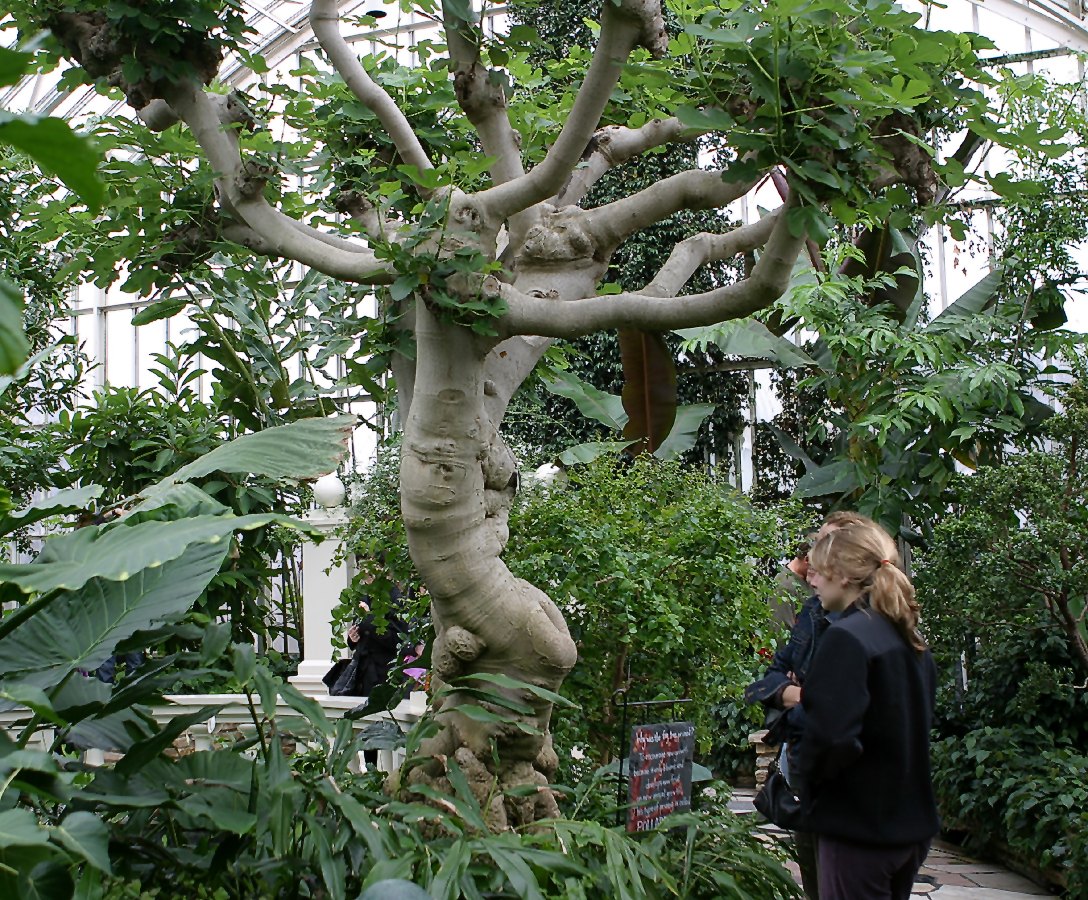
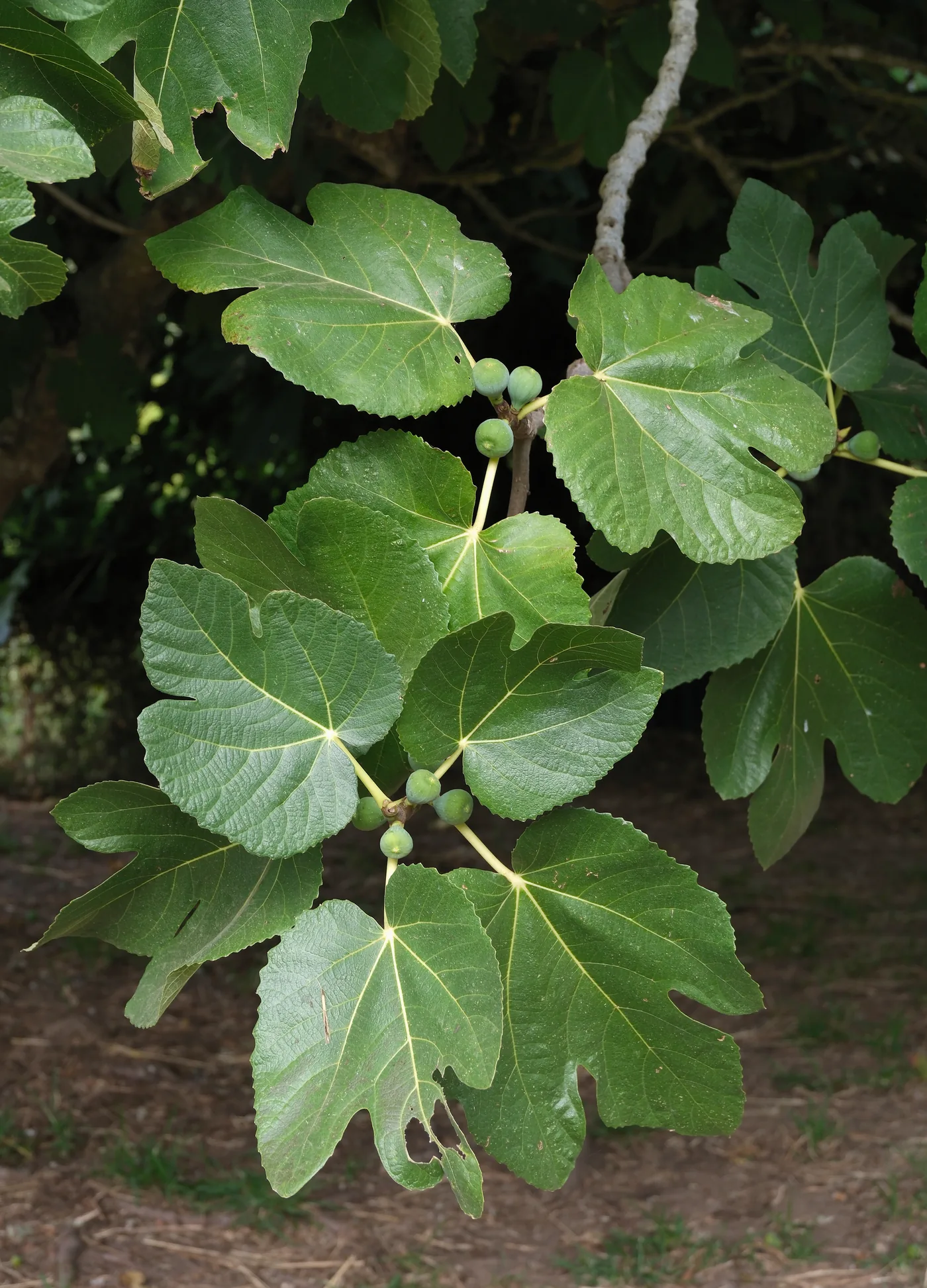
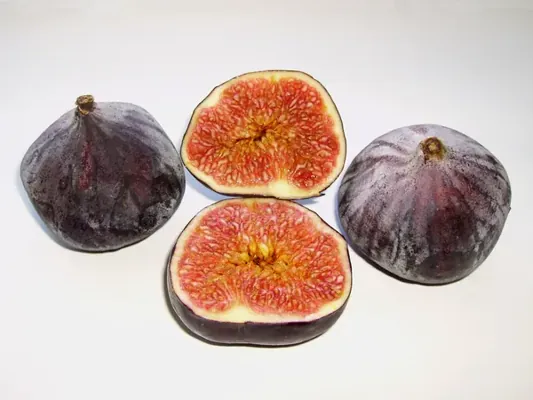
Photograph: Hardyplants at English Wikipedia, Public domain. Source: Wikimedia Commons

On this page
Introduction
A fig tree is one of the few fruit trees that will forgive a beginner. Root a cutting in spring, plant it out once it is fully rooted, keep it watered, and by the end of the season you have a shrub with leaves the size of a dinner plate. Two or three years on, it hands you more fruit than a family can eat in a week. We grow figs on our family farm in Kerrville, in the Texas Hill Country, where winters can bite and summers bake. The tree we take our clones from stands in the ground, is over 15 feet tall, and is cut back every year before winter, with mulch piled over its base to protect it. This guide is what that tree and its clones have taught us.
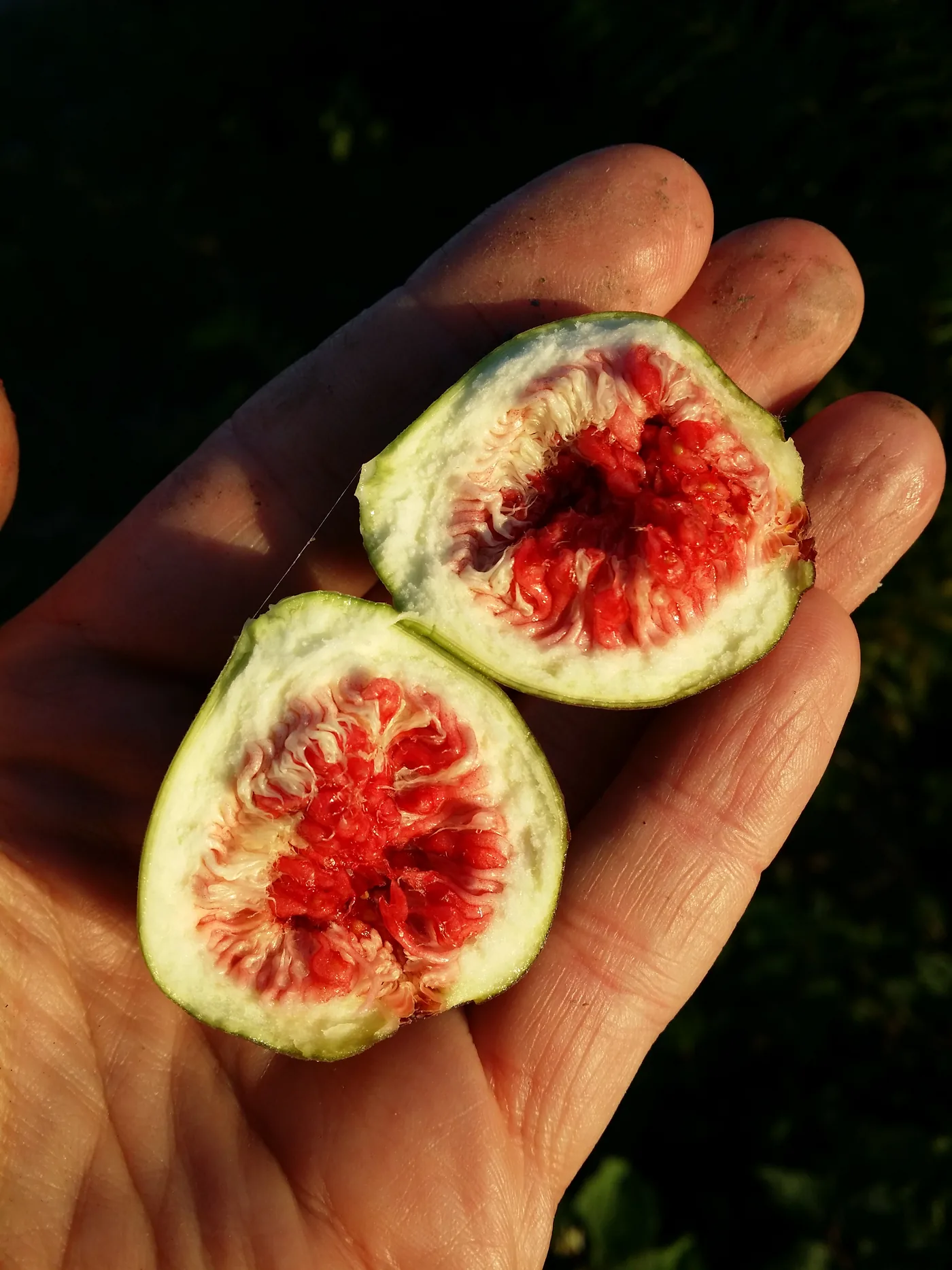
The plant is the common fig, Ficus carica, and we grow three variants of it. Its fruit is not a fruit in the usual sense. It is a hollow pod of stem tissue with the flowers sealed inside, and the common type sets that pod without pollination, so there is no wasp, no second tree and no hand work to arrange. We cover where to put it, which varieties earn space in Texas, how to root and plant a cutting, how to water and feed a tree that drinks a great deal, how we cut it back and protect it from a hard freeze, what goes wrong with it, and how to harvest the fruit at the right moment.
Summary
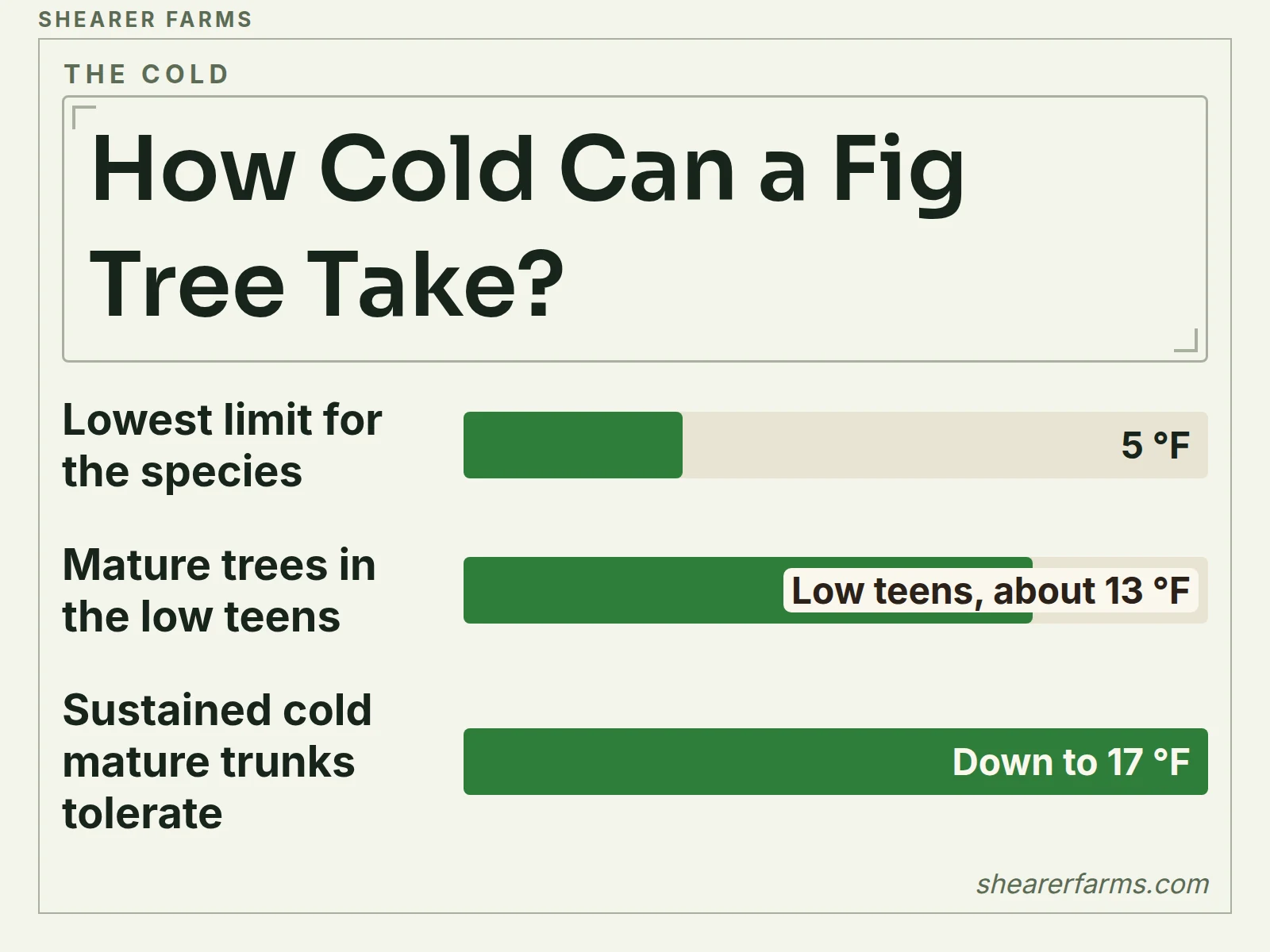
- Climate: figs do best where winter lows stay above 5 °F. Mature trees can take sustained cold near 17 °F, and survive the low teens, but young wood is much weaker.
- Cuttings: we take clones from our mother tree and root them fully in spring before they go anywhere else.
- Potting a rooted cutting: bury it about halfway down its height and leave a couple of inches between the bottom of the cutting and the bottom of the pot.
- Water and feed: a fig drinks a lot, so we water often. We feed with extracted fig leaf plus other nutrients for extra nitrogen while it grows, then change the ratios when fruit starts.
- The mother tree: in the ground, over 15 feet tall, cut back every year before winter, with mulch over the base.
- Varieties: 'Celeste' for cold hardiness and early June fruit, 'Texas Everbearing' for fruit from June through August, 'Alma' only near the Gulf.
- Handle with care: the white sap of the leaves and stems burns skin in sunlight, and some people are allergic to the fruit.
Why does a hardy tree still lose crops here? Because the fig's trouble in Texas is almost never the summer. It is the winter, and the rest of this guide keeps coming back to that.

The other half of this plant, turning fruit, leaf and sap into extracts, is on our partner website, and a link to it appears near the end of this guide.
What You Are Growing
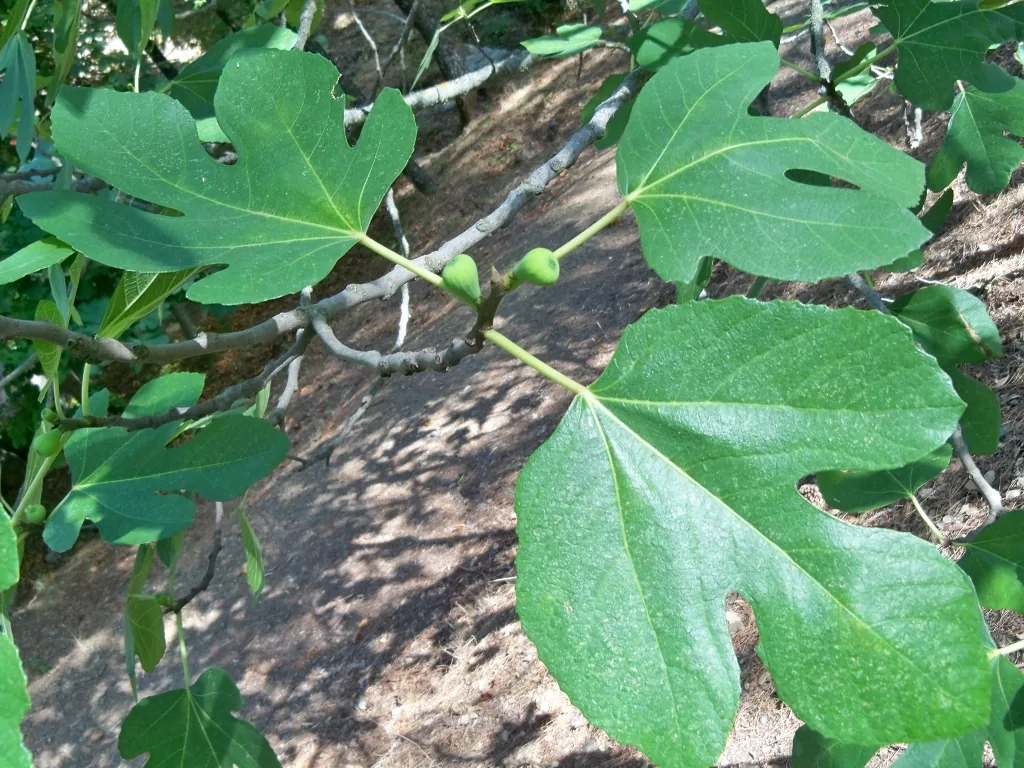
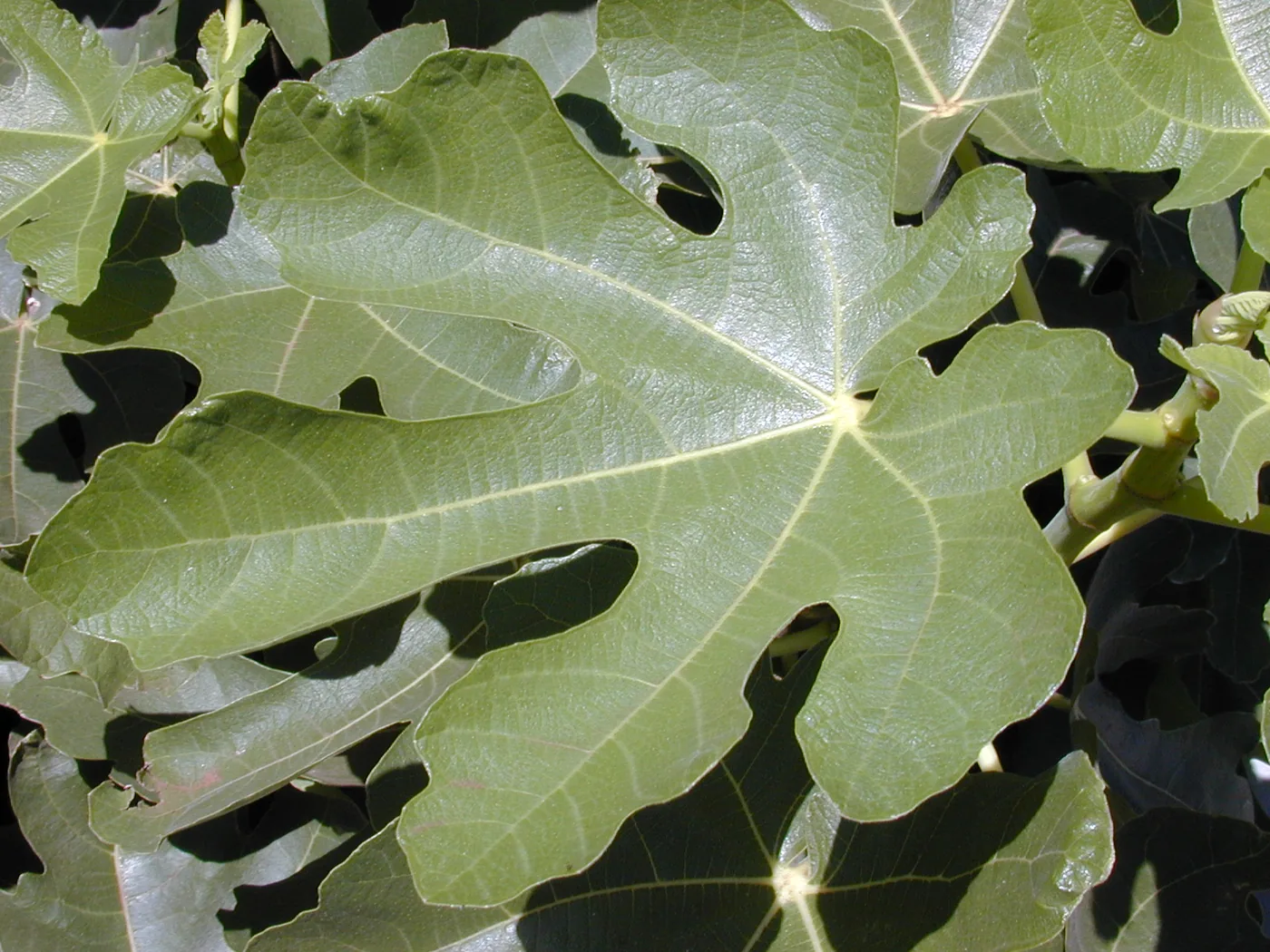
Left alone, a common fig grows as a spreading, many-trunked tree up to about 20 feet tall. Its roots are shallow and fibrous, which makes it quick to establish and sensitive to drought. The leaves are large, lobed and rough, and they release a milky sap when torn.
The tree makes two crops. A first crop forms on last year's wood and ripens in late spring. A larger main crop forms on the new growth and ripens from late summer into fall. Which crop you get after a hard winter depends on how much wood the freeze killed, and that is the reason variety choice matters so much in Texas.
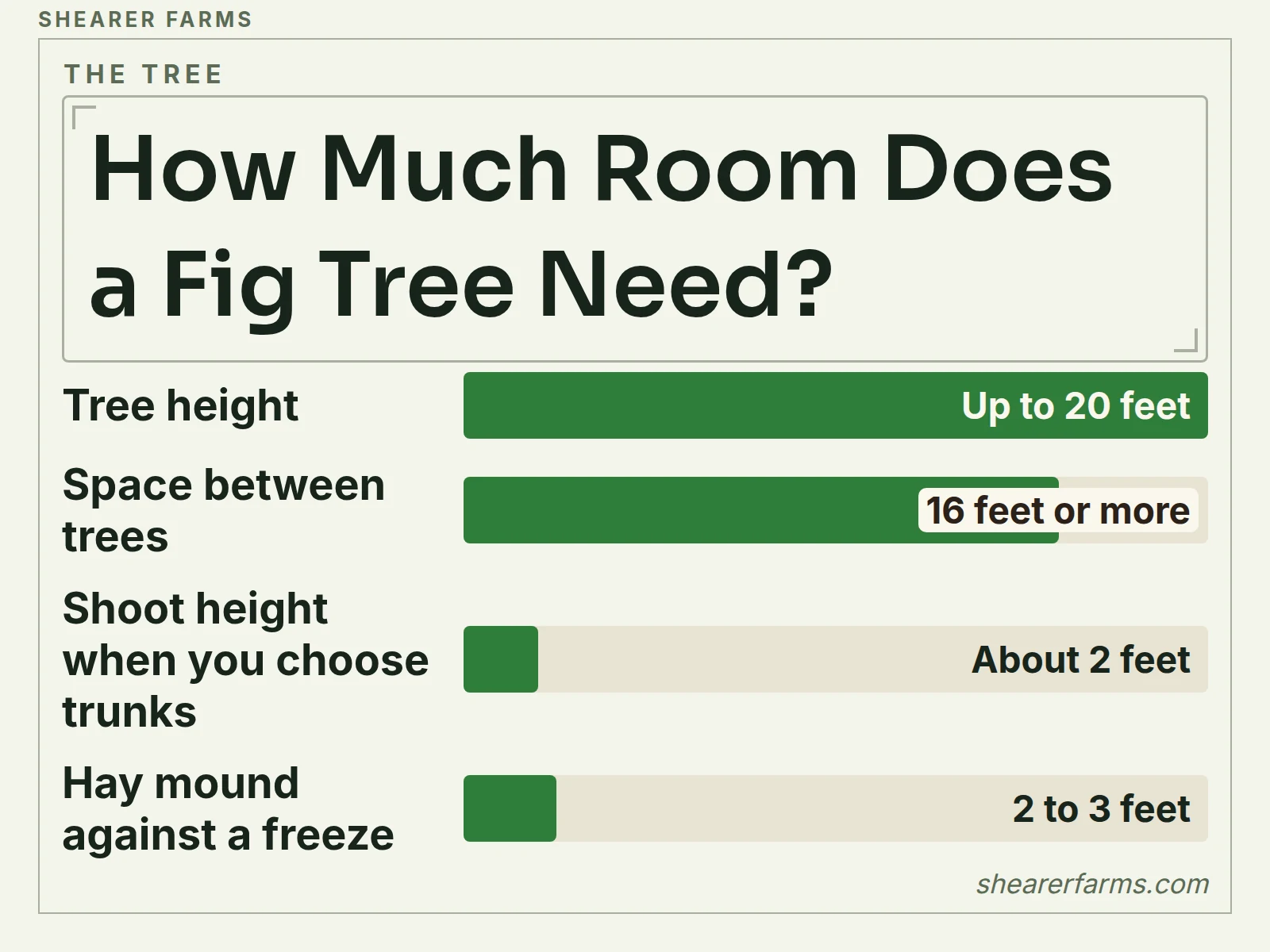
Plan the space before the tree arrives. A tree that reaches 20 feet needs at least 16 feet between neighbors, and it needs room for a hay mound or a wire cage in winter. A fig on the south or east side of a barn or house wall is a classic Texas placement, because the wall holds heat on a cold night and the morning sun dries the leaves quickly after rain.
Climate and Cold
Figs are generally limited to places where winter temperatures stay above 5 °F, and stem tissue can be injured well before that. In a winter with long cold, mature trees survive the low teens. Dry winters, and trees that never had time to harden off in fall, can suffer severe damage at warmer readings.
A freeze that kills the top of the tree does not always kill the tree. A fig frozen to the ground usually sprouts a crowd of new shoots from the roots, and it can bear a late crop on them the same summer. The first crop is lost in that case, and the main crop may be smaller or later.
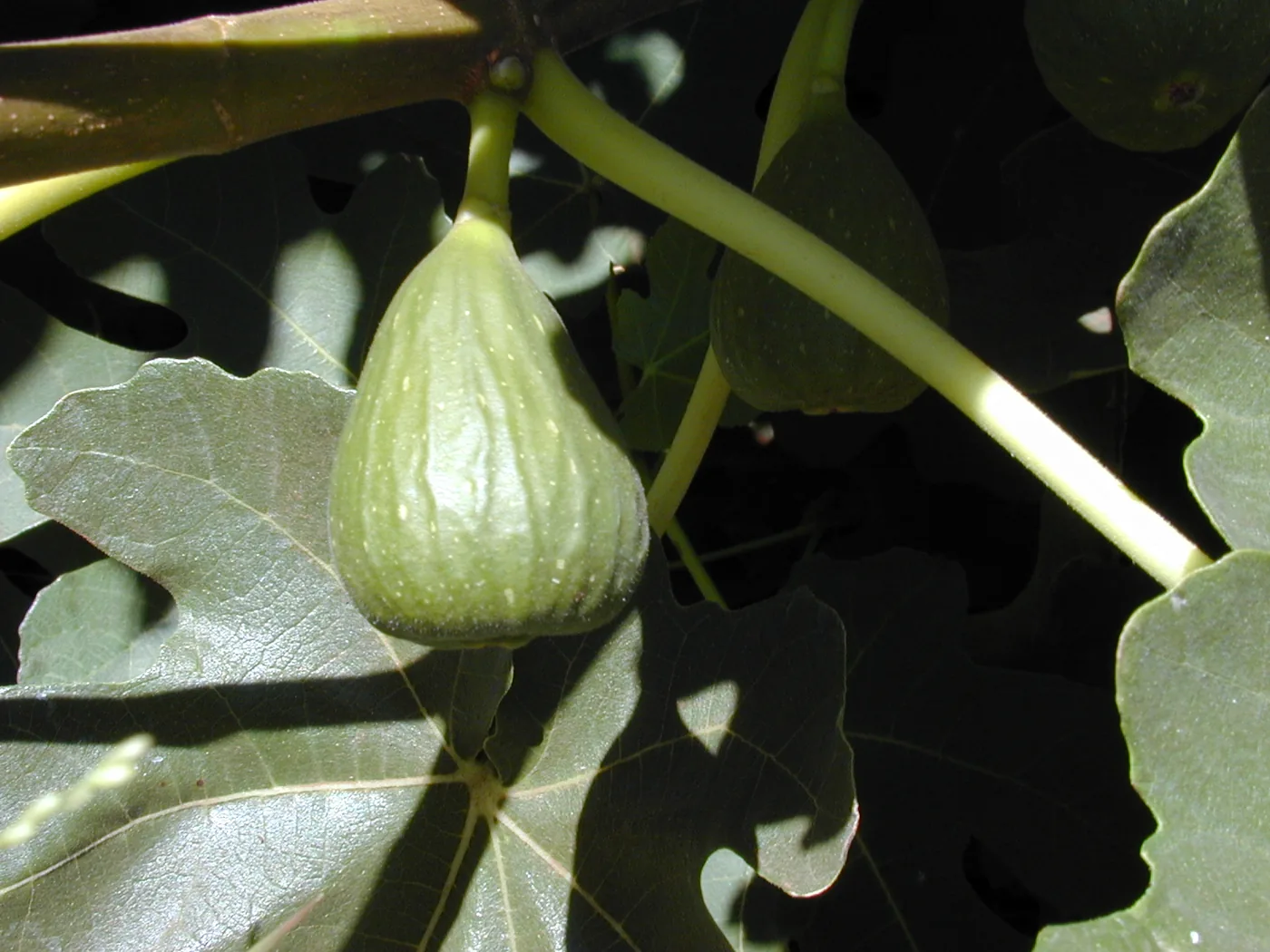

In the Hill Country, a mild February can be followed by a hard March freeze, and that swing is harder on figs than a steady cold winter. Waking up early is the danger, since buds that have swelled are far less hardy than buds that are still asleep.
Choosing a Variety
Only the common fig is grown in Texas and the other Gulf states, and three standard varieties have served the South for decades. Four more have earned a trial planting beside them.
| Variety | Cold hardiness | Fruit | Harvest |
|---|---|---|---|
| 'Celeste' | Most cold hardy evaluated in Texas | Small, brown to purple, rich and sweet | Mid to late June |
| 'Texas Everbearing' | Less hardy than 'Celeste' | Medium to large, reddish brown, mild | June through August |
| 'Alma' | Very frost sensitive when young | Rich and sweet, unattractive skin | Late season |
| 'LSU Purple' | Relatively hardy | Medium to dark purple, mild and sweet | Most years |
| 'Blue Giant' | Less hardy than 'Celeste' | Large, purple skin, pinkish flesh | South and coast |
| 'Bournabat' | Rather tender in the Hill Country | Large, pinkish, juicy | Late summer into fall |
| 'Lemon' | Somewhat tender | Yellow skin, mild citrus notes | Moderate crops |
For the Hill Country we would start with 'Celeste', since it appears to be the hardiest fig evaluated in Texas and it ripens in June, well before most others. 'Texas Everbearing', also sold as 'Brown Turkey', gives a reliable crop almost every year and keeps producing through August, and it makes a fair to good crop on new growth after a severe freeze. 'Alma' is rich and sweet, but it belongs within about 200 miles of the Gulf.
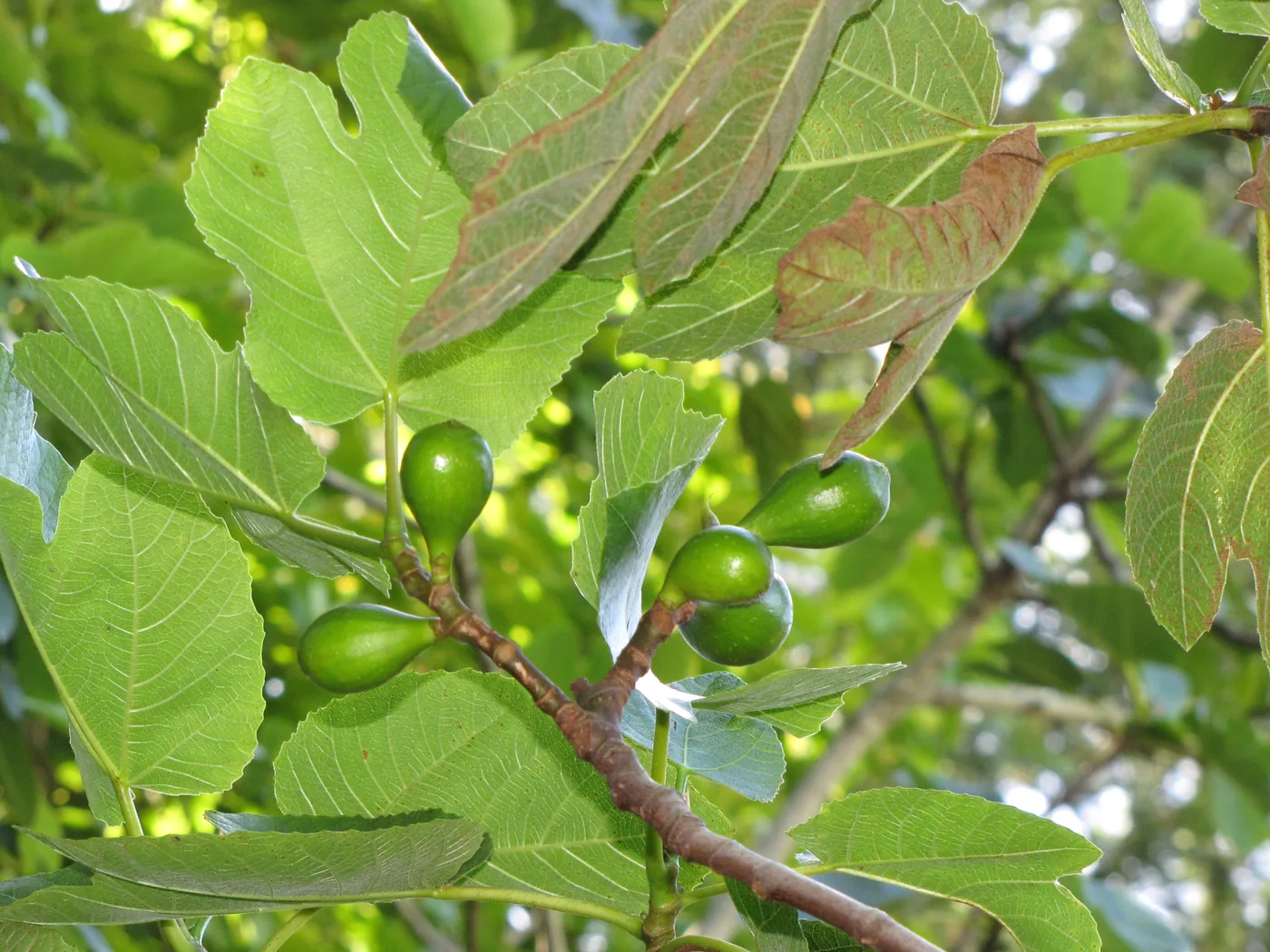

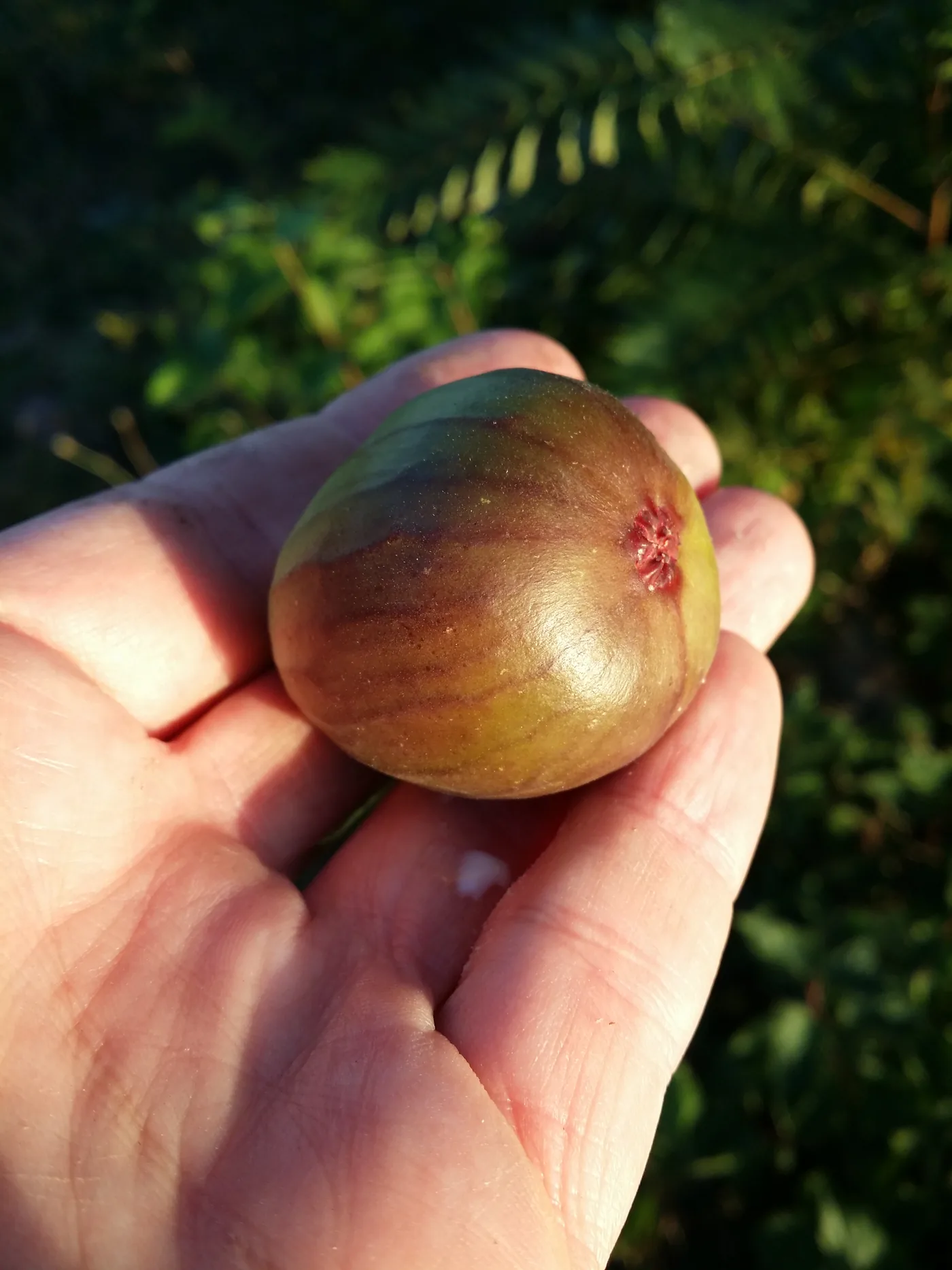
Look at the eye of the fruit, the small opening at the bottom. A variety with an open eye lets in rain and the dried fruit beetle, and the fruit can sour. A closed eye, as on 'Celeste' and 'LSU Purple', is the better choice in a wet year.
Variants Worth Growing
The question growers ask most is which fig to plant. There are three useful answers, one for the biggest crop, one for the most of the fruit's colored compounds, and one for the hardest winters. This guide names the three types worth growing from published sources, and the three we keep on the ranch are ours to name.
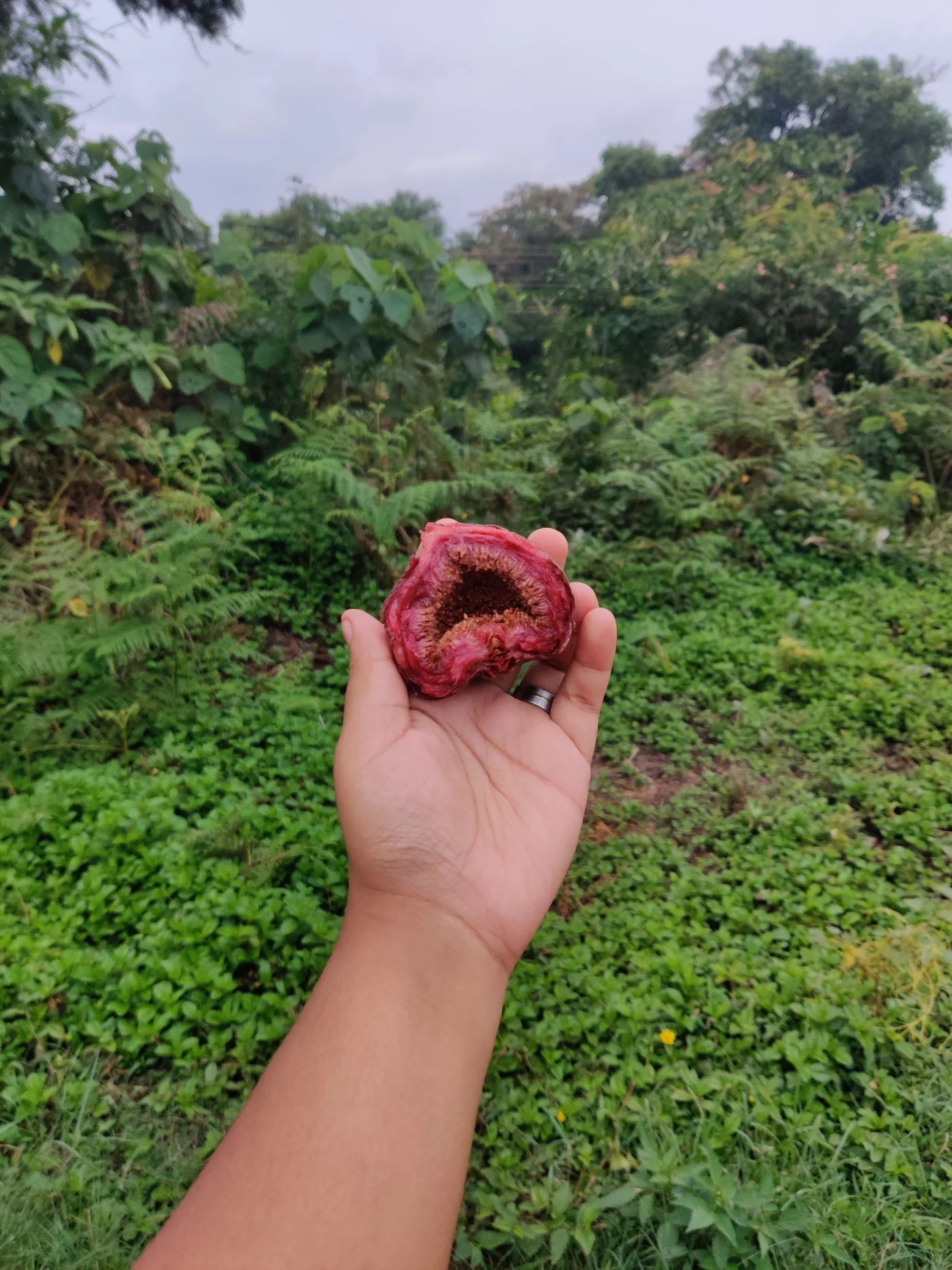

Read each row for the reason as well as the name, because the reason tells you whether it holds in your own yard.
| Question | Variant | Why |
|---|---|---|
| Top Yielding | 'Celeste' (also written 'Celestial'), and 'Texas Everbearing' | The extension sources used in this guide describe both as dependable bearers in a hot summer, and the Texas Everbearing type sets two crops a year where the wood survives. We found no replicated yield trial that ranks them, so these are the best-supported bearers and not a measured top. |
| Highest In anthocyanins and polyphenols | 'Mission' (Black Mission), a dark-skinned fig | In a comparison of fresh fig fruit, Mission held the highest polyphenols, flavonoids and anthocyanins, and the skin carried most of them. Darker varieties measured higher than pale ones, and the leaf chemistry was not part of that study. |
| Hardiest | 'Chicago Hardy' (also sold as 'Bensonhurst Purple') | University of Tennessee Gardens lists the above-ground wood as hardy to about 10 degrees F and the roots to about 20 degrees below zero. When the top freezes, the tree resprouts from the root and still fruits on the new wood in the fall. |
Ask a nursery which of these it carries and plant the one that fits your winter. Mission is the better fruit for color and polyphenols but is less cold hardy than Chicago Hardy, so in a cold place a pot that comes inside is the way to grow it.
Growing For Fruit and Leaf
A fig tree is grown for the fruit, and on this ranch also for the leaf, which is used in the extraction guide. The two want slightly different things, and the grower decides which crop matters more before the tree is pruned.
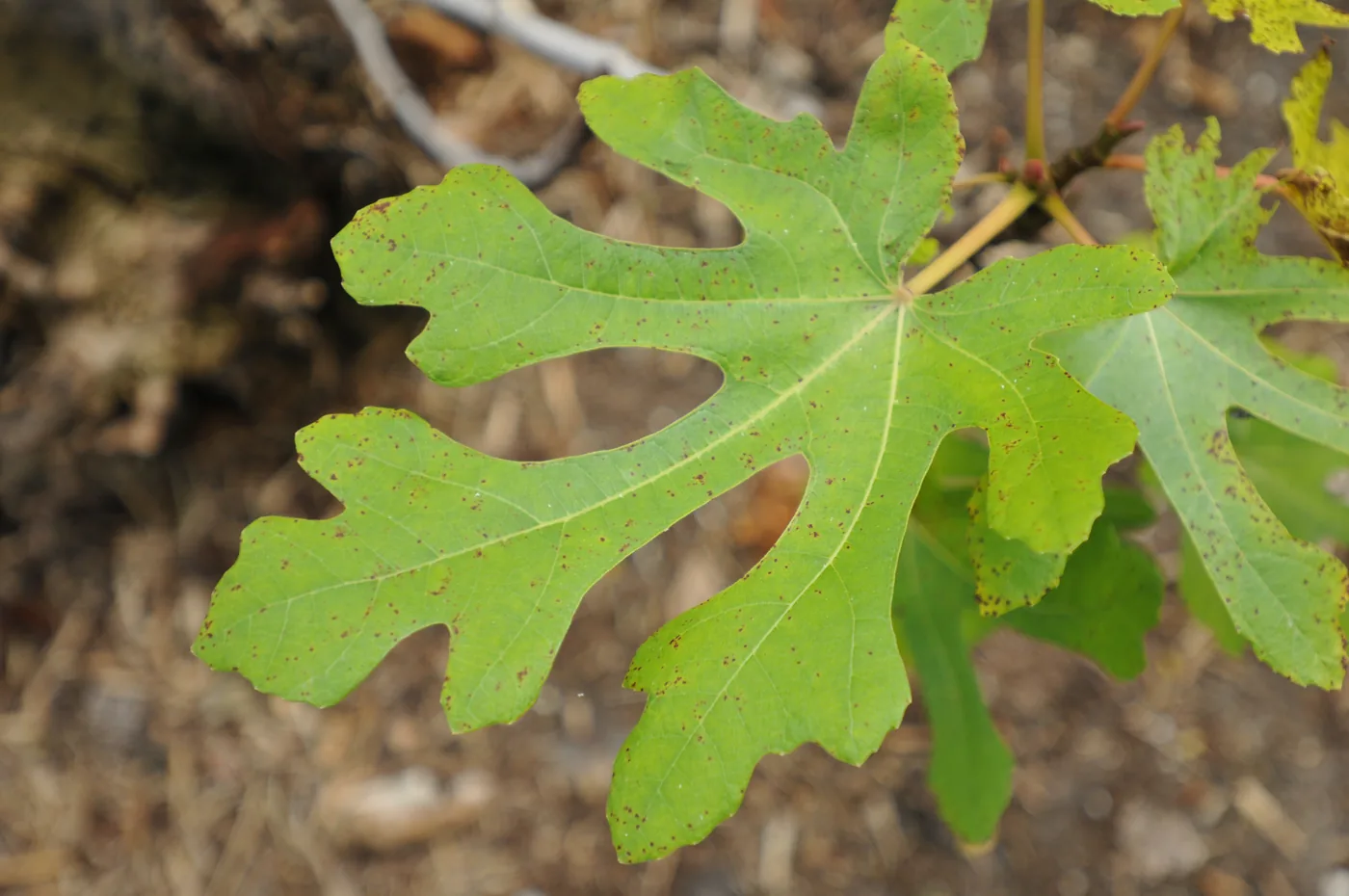

Sun and soil. Full sun and warmth ripen the fruit and raise its sugar. Well-drained soil keeps the roots healthy, and water that stands in the soil in winter rots them. A tree in a pot needs a mix that drains fast.
Water and feeding. Figs drink a lot, so water often through the growing season and mulch the base. Nitrogen builds leaf and shoot, so it is right while the tree is growing. Once fruit sets, shift to other nutrient ratios, because too much nitrogen keeps making leaf and delays ripening.
Spacing and pruning. Leave enough room for the sun to reach the middle of the tree. Prune to open the canopy and to renew shoots, since the main crop forms on the new season's growth in cold places and a first crop forms on last year's wood where the wood survives. Cut hard and the tree makes more leaf and fewer early figs. Cut lightly and you keep the early crop.
Harvest timing. A fig does not ripen after it is cut, so let the fruit ripen fully on the tree, then harvest in the cool of the morning. For leaf, harvest healthy mature leaves from the middle of the shoot, wear gloves and keep the sap off bare skin.
Propagation. A cutting from last year's wood roots fully in spring and gives a tree identical to the parent, which keeps the fruit and leaf you already know. A tree is a clone of the mother, so a good mother tree is the whole asset.
If you want sap or leaf more than fruit, the advice changes: let the tree make more shoot, prune harder, and keep the nitrogen higher for longer, and accept a smaller fruit crop. Leaf and sap are collected from a tree that is growing, and fruit comes from one that has slowed down to ripen.
Starting From a Cutting
Figs are among the easiest fruit crops to propagate, and that is how we make every new tree. We take clones from the mother tree, so each new tree is a copy of one we already know. Our rule is simple: the cutting is rooted fully, in spring, before it is planted anywhere.
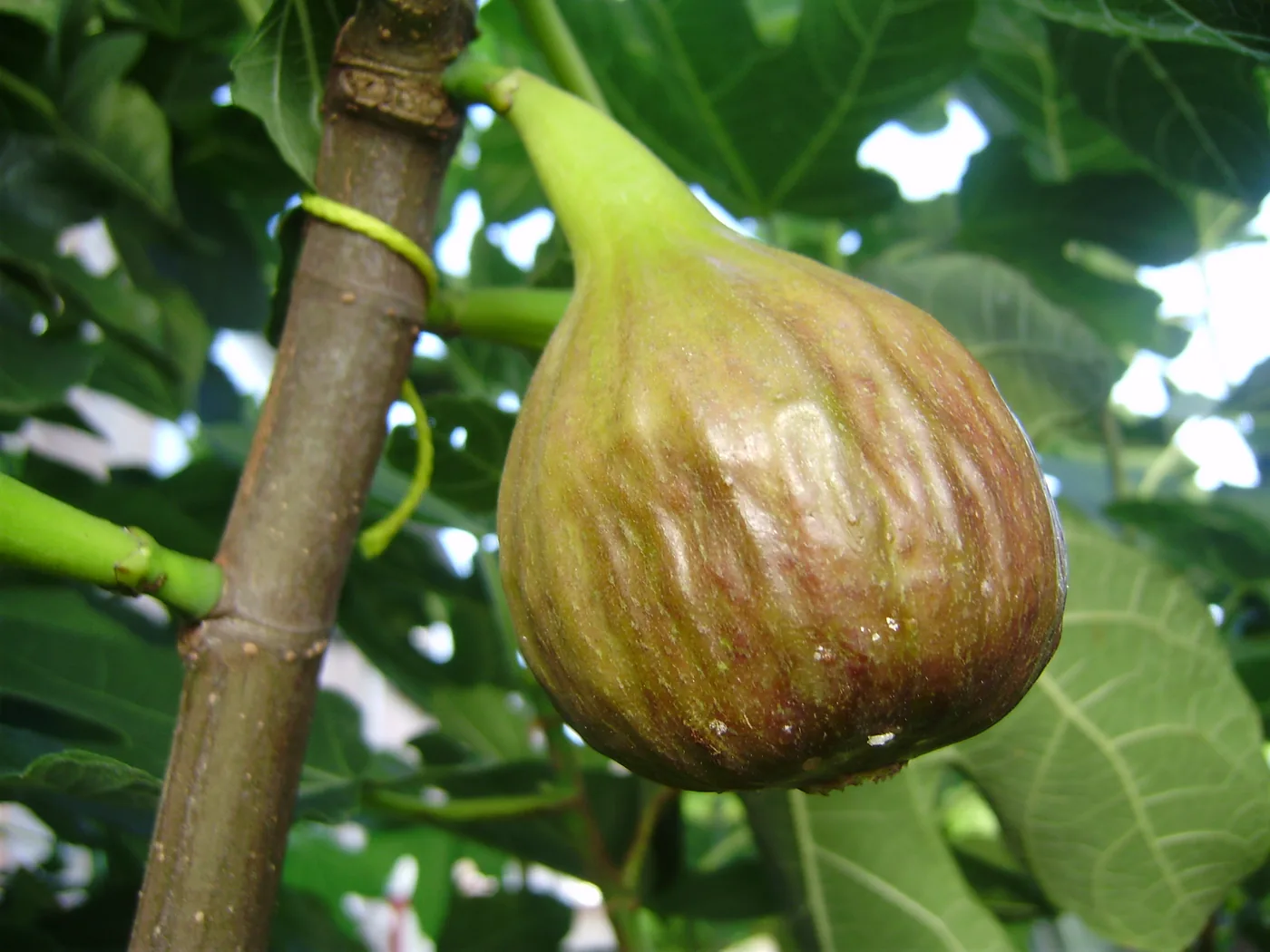

Georgia extension advice for cuttings is to take them from one-year-old wood, 8 to 10 inches long, because tips and soft growth do not root well. The steps below follow that advice.
- Cut a piece of last year's wood 8 to 10 inches long and about half an inch to an inch thick from the mother tree.
- Make a flat cut at the top and a slanted cut at the bottom, so you always know which end goes down.
- Set the cutting in a loose, well-drained mix with the top bud just above the surface, and keep it evenly moist, never soggy.
- Keep it warm and in bright light through spring.
- Wait until it is fully rooted, with roots that fill the mix and a healthy new shoot, before you move it.
Fully rooted is the point of the whole exercise. A cutting that has leafed out on stored energy and has few roots looks fine for a month and then collapses in the first heat. Roots first, then a new home.
Planting a rooted cutting in a pot
Once a cutting is fully rooted, we plant it into its pot so that about half of its height is below the soil. The bottom of the cutting then sits well above the bottom of the pot, with a couple of inches of loose mix beneath it for the roots to grow down into. Burying half the stem gives more places for roots to form along the buried wood, and the open space below leaves the root tip somewhere to go.
Softwood cuttings can be used as well, but they need a mist system to survive. Most home growers will do better with a stick of last year's wood, or with a potted tree from a nursery that guarantees it free of root-knot nematodes.
Planting
Plant in late winter or early spring, while a bare-root tree is still dormant, or put a fully rooted, potted tree in the ground once the last hard frost has passed. Choose a site in full sun with well-drained soil. A fig will grow in anything from coarse sand to heavy clay, but sand carries a risk of nematode damage, and clay that holds water in winter rots the roots.
- Dig a hole deeper and wider than the roots need.
- Set a nursery tree upright so that it sits 2 to 3 inches deeper than it grew in the nursery, the Texas A&M figure.
- Crumble the soil around the roots and press it down several times as you fill, so every root touches moist soil.
- Water thoroughly to settle the soil around the roots.
- Cut the dormant trunk back by about a third.
- Skip fertilizer at planting, since the first growth comes from the reserves stored in the trunk and roots.
Why cut it back? Digging a tree from the nursery costs it roots, and a shorter top asks less of the ones that remain. Even a potted tree should be cut back so it makes strong growth in its first season.
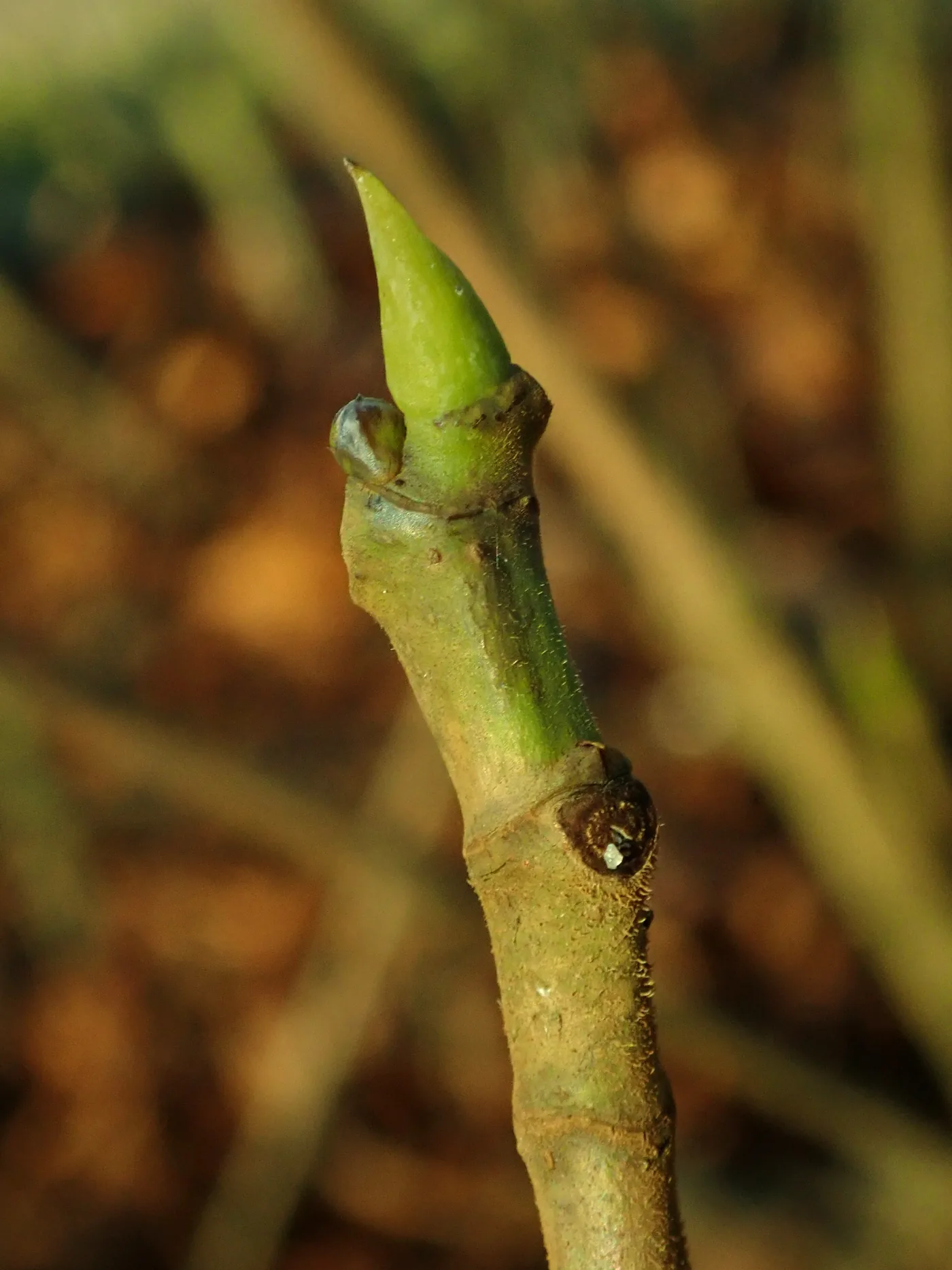

Label each tree with its variety and planting date on a tag that will outlast the weather, because in five years you will not remember which one is which.
Water, Mulch and Feeding
A fig drinks a lot. It has big leaves, shallow roots and fast growth, and in a Hill Country summer it will empty a pot or a bed quickly. We water our figs often. Often does not mean soggy: the mix or the soil has to drain freely, and the water has to reach the whole root zone each time. A thick layer of organic mulch pays for itself here. Spread wood chips, shredded leaves or hay over the root zone, and pull it a few inches back from the trunk so the bark stays dry.
The first two years are the ones that decide the tree. A tree that wilts in July drops its fruit, and a young tree in a pot may need water every day in summer.
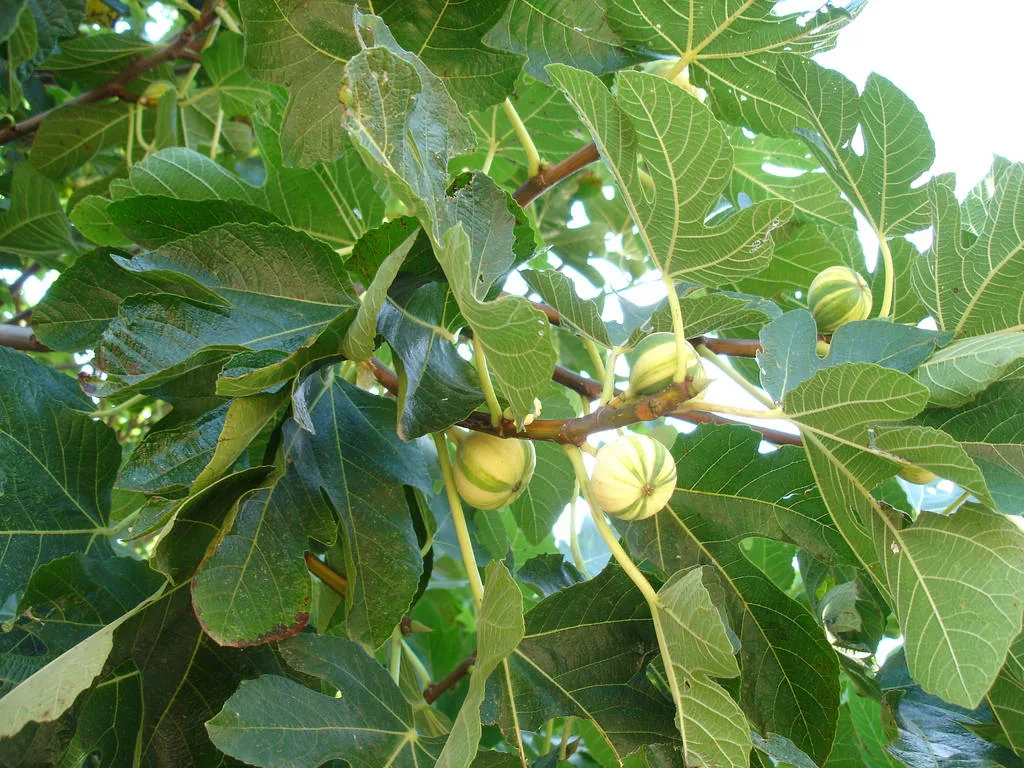

For food we use extracted fig leaf. After leaves go through our extraction work they are spent, and instead of throwing them away we put them back to feed the trees. We combine the leaf with some other nutrients to raise the nitrogen, because a growing tree needs nitrogen for new shoots and leaves. Only leaf that has dried until no smell of solvent is left goes on the soil. The exact mix is on the list of numbers we are still writing down.
When the tree starts to fruit, we change the nutrients. Nitrogen comes down and the other nutrients go up in proportion, with potassium and calcium the usual examples for fruit quality. Too much nitrogen gives you leaves and few figs, so the change at fruiting matters as much as the feed before it.
For a starting point, extension guides give a baseline for in-ground trees: North Carolina advises 1 pound of an 8-8-8 fertilizer for each year of the tree's age, up to 12 pounds. Watch the tree and not the calendar. A shoot that grows a few feet a year on a bearing tree is about right.
Dragon Fruit Cultivation Guide
Complete guide to dragon fruit cultivation covering Hylocereus and Selenicereus species, climate requirements.
For a More In-Depth Read, Click HerePruning and Training
In the subtropics, figs can be grown as single-trunked trees. In most of Texas they are grown with several trunks, so a freeze that kills one does not end the tree. Aim for four to six main stems that spread like a vase and leave the center open to light and air.
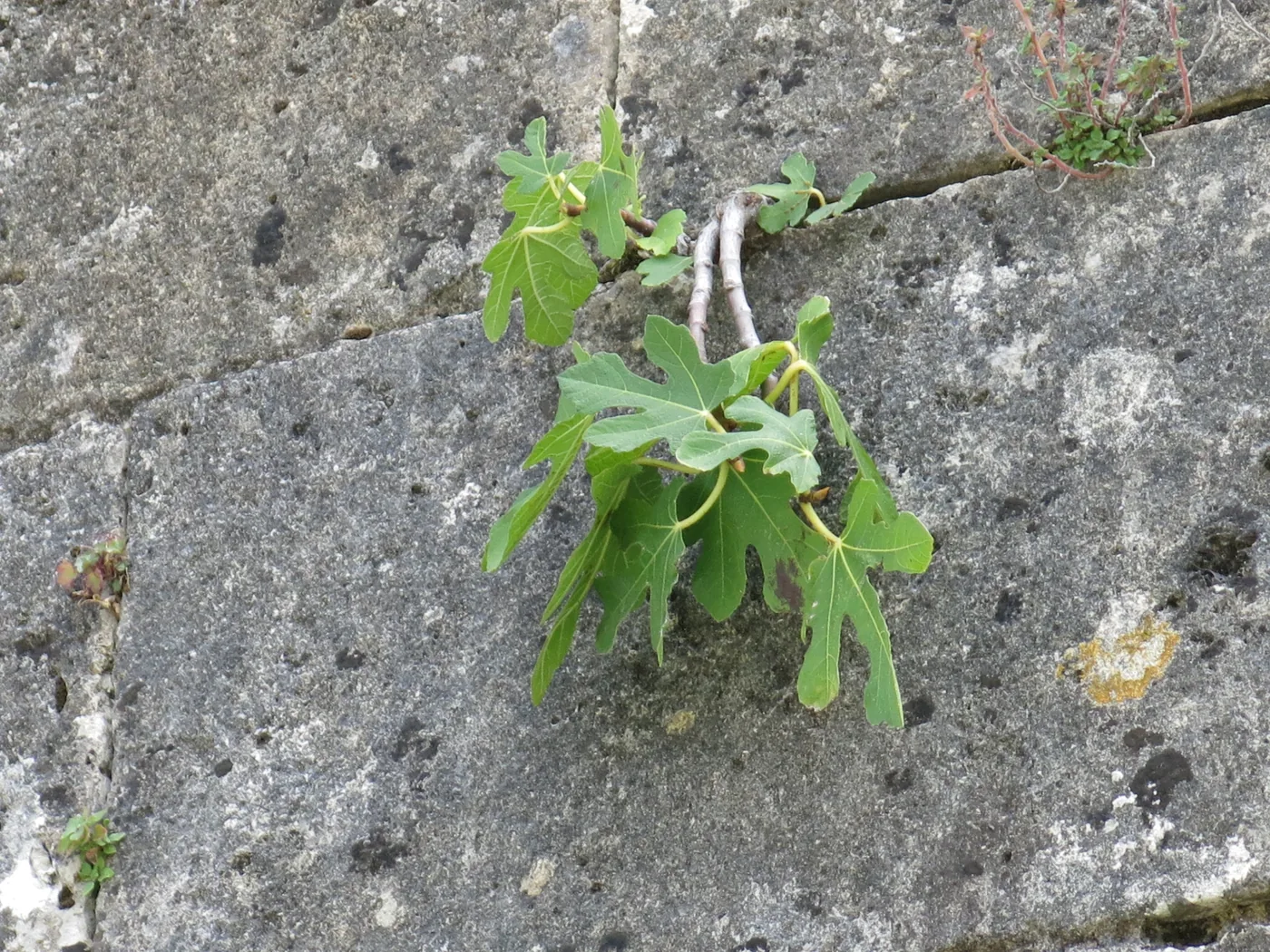

Our mother tree is cut back every year before winter. That keeps a tree over 15 feet tall within reach and gets the wood ready for the mulch described in the next section. The cost is the first crop, since the first crop forms on last year's wood and a hard cut removes some of it. The main crop forms on the new growth, and a tree that has been cut back and fed well grows plenty of that.
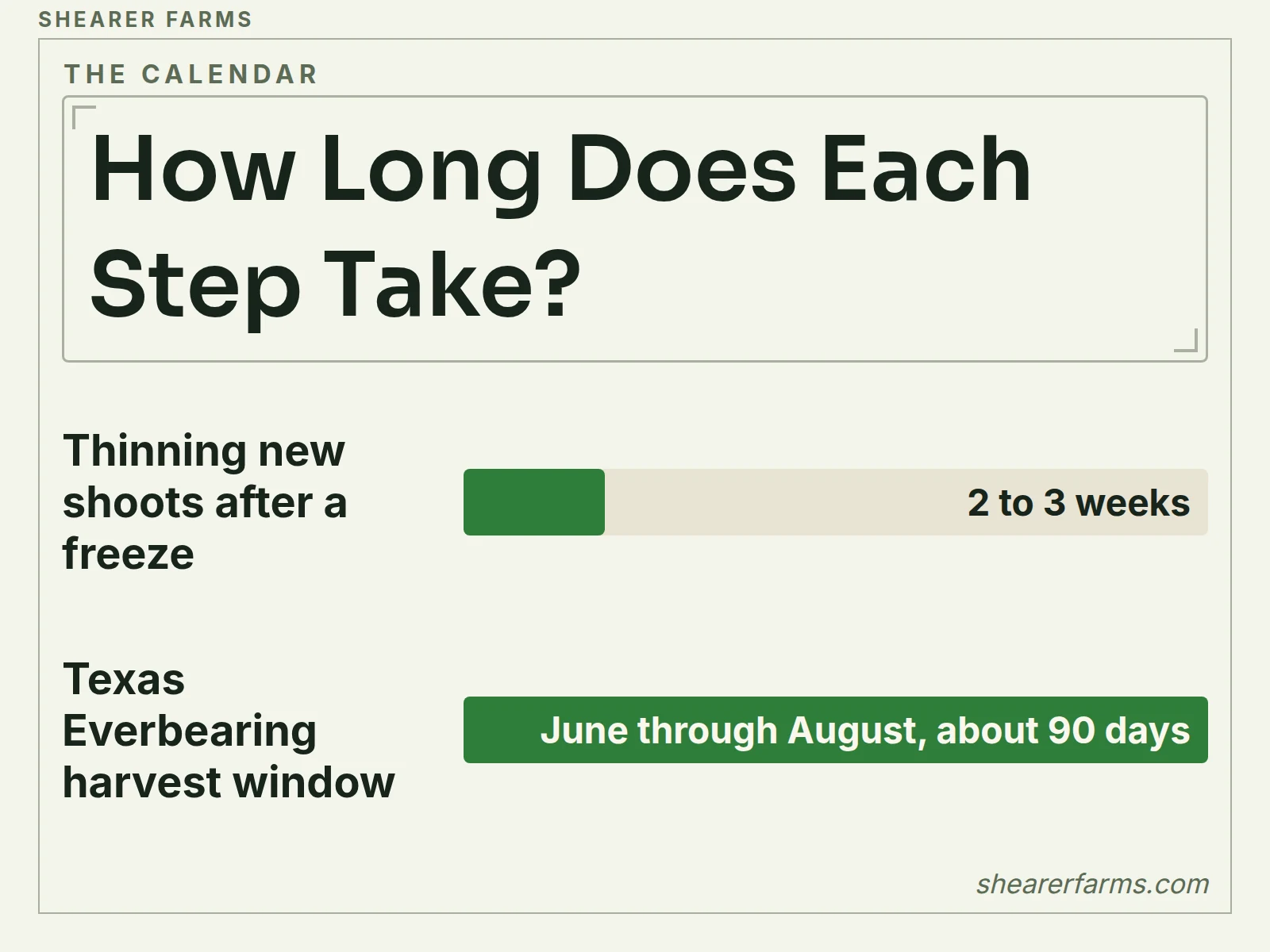
After a winter that freezes the tree to the ground, you will see many shoots rise from the base. When they reach about 2 feet, choose five or six strong ones to keep as the new trunks. Remove the rest over two to three weeks and not all at once, since a sudden loss of leaf area shocks the tree.
Take out dead, crossing or rubbing branches, and shorten only what is out of reach. Cut back each year, and cut back before the cold, not after the buds have swollen.
Protecting the Tree From a Freeze
How well a fig survives cold depends on its variety, its soil moisture and how well it was conditioned for cold.
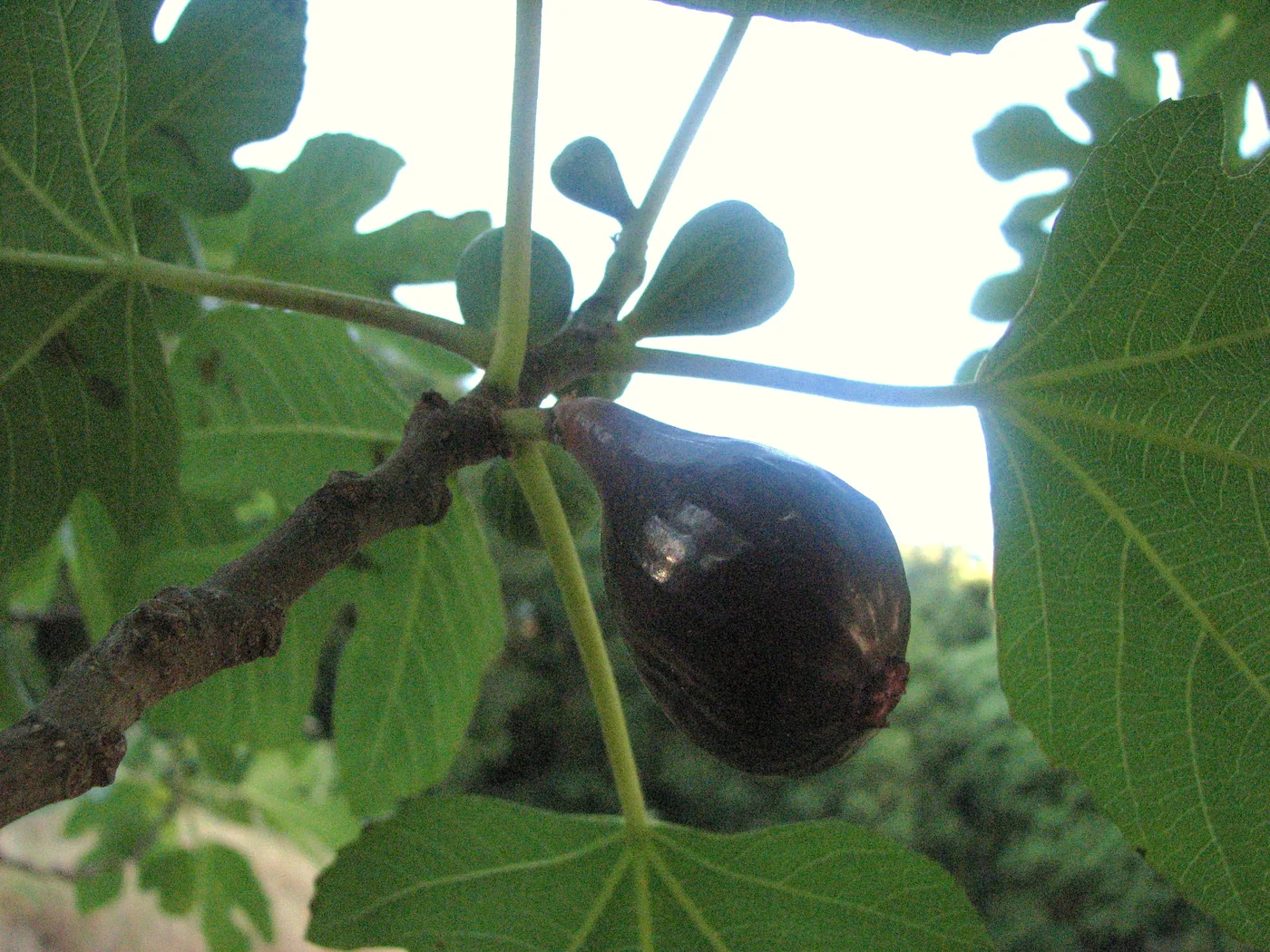

Mature trunks stand up to sustained temperatures near 17 °F, and young plants and tender trunks fall to much less. Our own method is to cut the tree back before winter and mulch over its base. Extension guides describe the same idea: Stark Bros. advises mulch 12 to 20 inches deep over the base and the stubs after leaf drop, and the University of Tennessee suggests a heavy mulch or a mound of soil around the base in late fall. The roots stay alive under that blanket, and the tree regrows from them in spring. A few cheap habits make up the rest of the defense.
- Water thoroughly a few days before a hard freeze in a dry fall or winter, because moist soil holds heat better than dry soil.
- Mulch over the base deeply before winter, and mound spoiled hay 2 to 3 feet up the trunks of trees you leave standing.
- Set a wire cage over a young plant and stuff it with hay, lawn clippings or leaves.
- Remove the cages and pull back the hay after the last spring frost, and use the material as mulch.
Watch the forecast as well as the thermometer. A clear, still night is colder at ground level than the number on the weather app, and the hour before sunrise is the coldest.
Pests and Diseases
The fig is one of the most trouble-free fruits in a mild climate, and its troubles are few and well known.
Fig rust
Fig rust, caused by Cerotelium fici, is the greatest disease threat to figs in Texas, and it is worse in rainy seasons and rainy places. Infected leaves turn brown and grow orange spore structures on the underside. Badly hit leaves fall early, which weakens the tree and leaves it unable to ripen the crop.
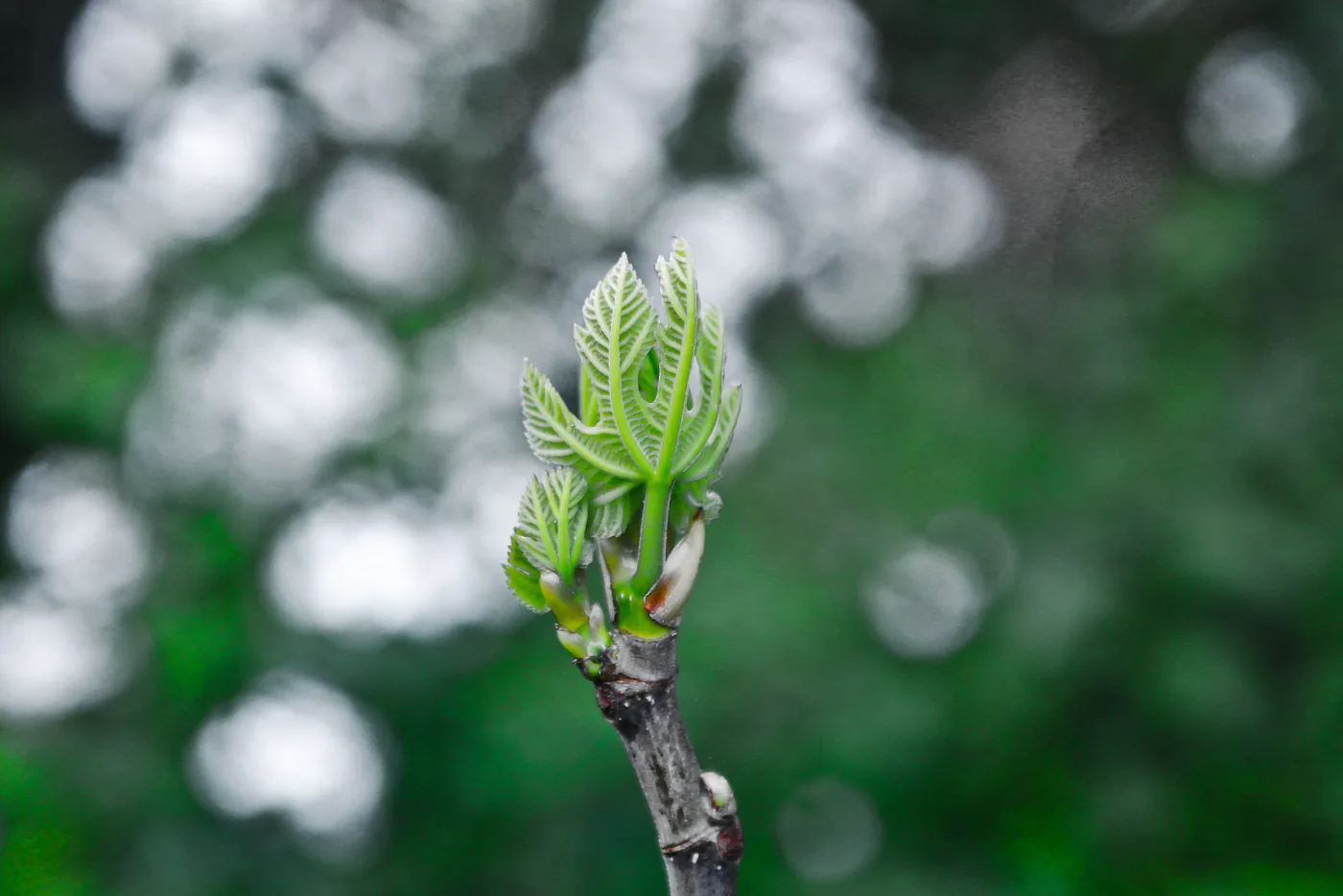

Rake up and destroy fallen leaves, since the spores overwinter there. No conventional fungicide is approved to control fig rust. Organic copper products work if you apply them at the first sign of the disease.
Fig mosaic virus
Fig mosaic virus, thought to be caused by a group of viruses, mottles the leaves in the heat of midsummer. Infected trees bear fewer, smaller and misshapen fruit. There is no cure, and the only protection is to inspect nursery stock carefully before you buy.
Beetles and nematodes
The dried fruit beetle is the one insect that usually spoils ripening figs. Plant closed-eye varieties to limit it. No conventional insecticide is approved, and elemental sulfur can keep the beetles from settling on trees with ripening fruit.
Root-knot nematodes are microscopic worms that attack roots, which swell or gall. The trouble can go unnoticed for years before the tree loses vigor, declines and drops its fruit early. Avoid it by buying nematode-free plants and planting them in clean soil.
Birds, deer and squirrels come for the fruit and the young wood in our country. Netting over ripening branches and a cage around a young tree solve most of it.
A Year With the Tree
Keeping the calendar in mind makes the work lighter, because a fig asks for something different each season.
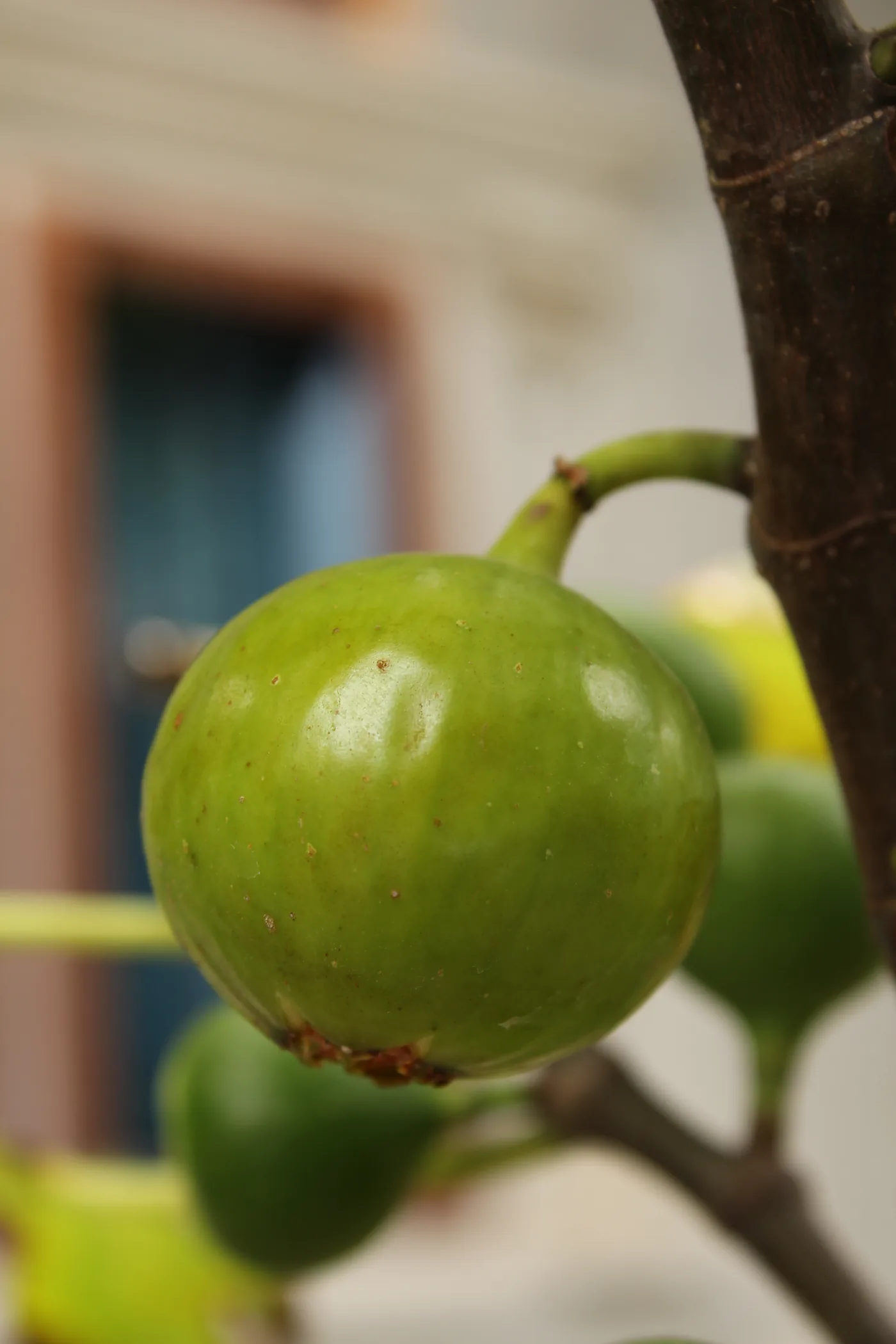

This is how our year runs, from the coldest month onward.
- Winter: the mother tree sleeps under its mulch. Check the mulch and the cages after each hard freeze.
- Late winter: plant bare-root trees, cut them back by a third, and take wood for cuttings from the mother tree.
- Spring: root the cuttings fully, watch for freeze injury on swelling buds, remove the cages after the last frost, pull the mulch back from the trunk, and give the first feed with a high-nitrogen mix.
- Early summer: pot up the fully rooted cuttings, keep the water steady and often, and put netting over the ripening branches.
- Late summer and fall: when fruit starts, change the feed to higher ratios of the other nutrients, harvest the main crop, watch for rust, and rake and destroy fallen leaves once they drop.
- Before winter: cut the mother tree back, mulch over the base, and water the tree well before the first hard freeze.
Notice what is missing from the list: pollination and spraying on a schedule. A common fig needs neither. Its work is in watering, feeding and watching the weather, and acting a few days before the weather does.
Soil and Where the Tree Sits
Good drainage matters more than rich soil. A fig in heavy clay that holds water through winter loses roots to rot, and a fig in loose sand loses them to nematodes. The best ground is loam that drains within an hour of a heavy rain, with a surface layer of mulch that keeps the shallow roots cool.
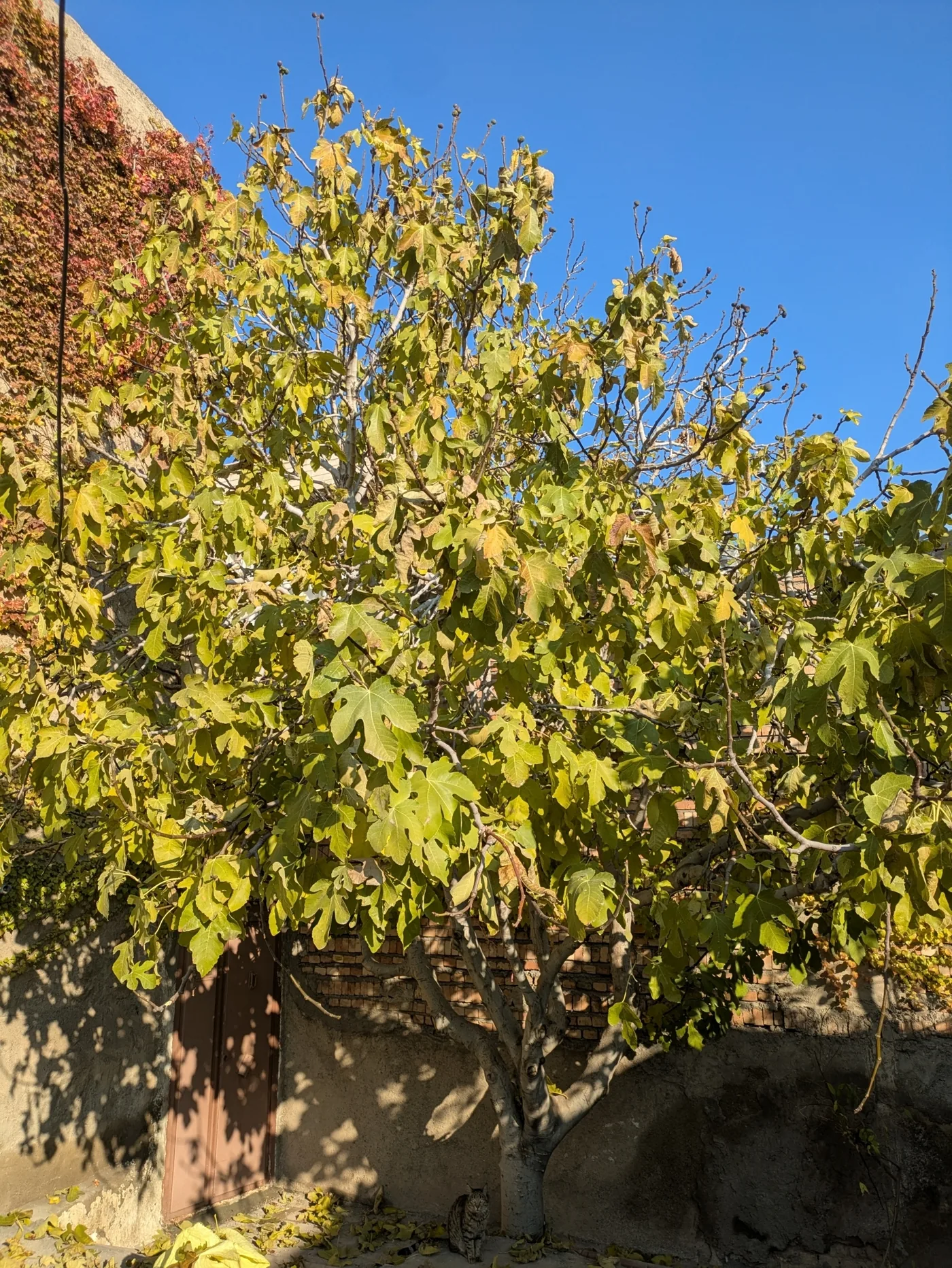

Raise the planting spot a few inches if your ground stays wet, and add compost to the backfill in a modest amount. Do not bury the trunk in compost, because a trunk that stays wet invites rot and gives borers a way in. Mulch the root zone, never the trunk.
Think about the wall as well. A fig set against a south or east wall gets heat at night and a quick morning dry-down, and a fig in a low spot where cold air collects gets the worst of every freeze. Cold air runs downhill like water, so a gentle slope above a gully is a safer place than the floor of the gully.
Growing in a Container
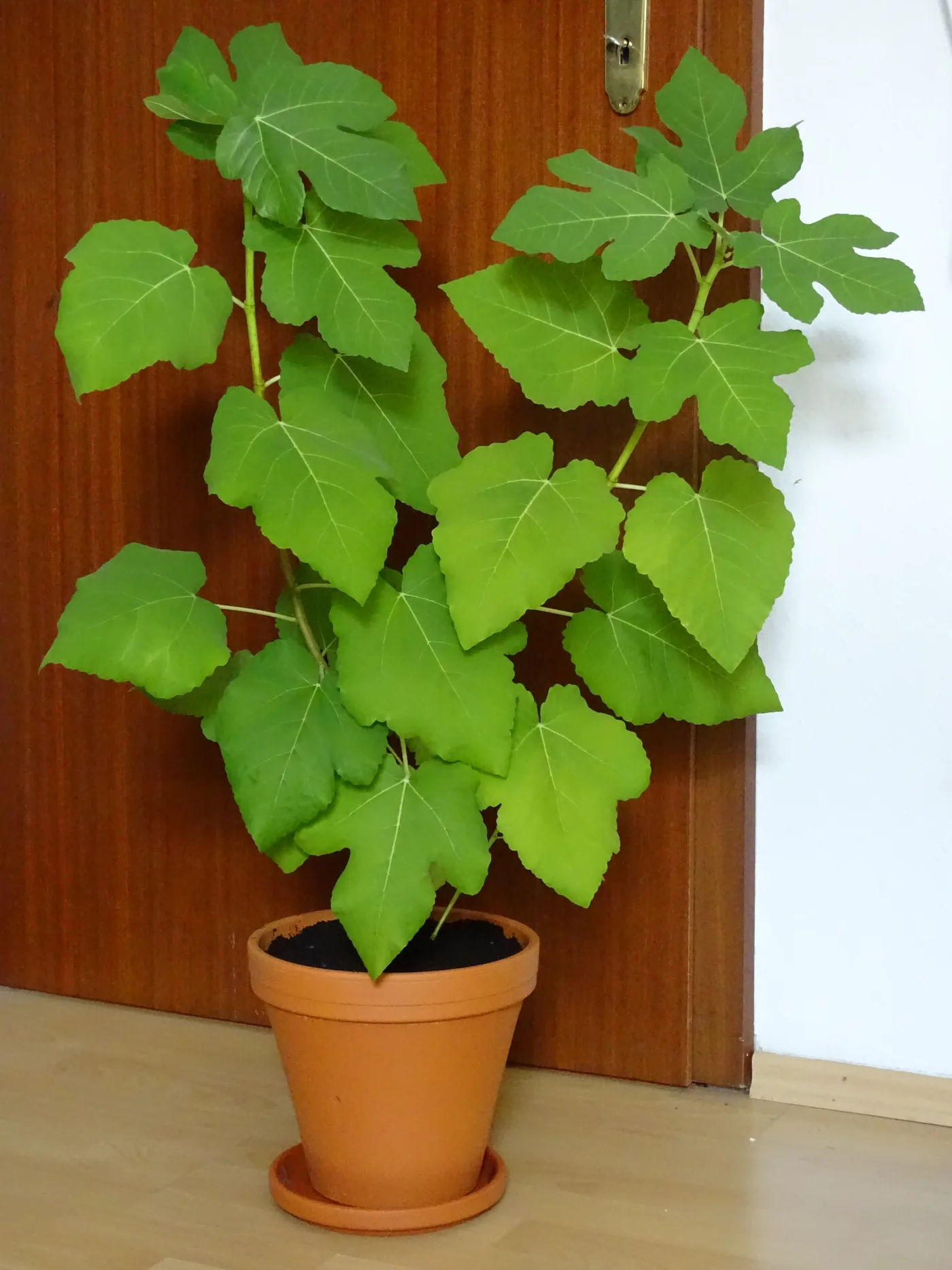
A fig in a large pot is a good answer to a Hill Country freeze, because you can roll it into an unheated garage or barn on the cold nights and back into the sun by day. Choose a pot at least as wide as a half barrel, with drainage holes you have checked, and fill it with a loose, well-drained potting mix and not garden soil. Plant a rooted cutting about halfway down its height, with a couple of inches of mix under the bottom of the cutting.

A pot dries out faster than the ground, so in July it may need water every day, and a fig that drinks as much as this one runs out of water first in a pot. Its roots freeze more easily than roots in soil, too. Bring it under cover before a hard freeze, water it lightly through the winter so the roots do not dry out, and put it back outside after the last frost. Expect a smaller tree and a smaller crop than a tree in the ground would give, in exchange for the control.
In colder places than ours, growers lay large trees down and bury them in a trench for the winter, and the practice is old. We mention it because it shows how far people will go for a fig, and because it is a last resort if a prized tree is too big to move.
A Short History
Figs are believed to be native to western Asia, and people have prized them since ancient times. They reached California from Spain in the mid 1700s and spread from there to the warm parts of the country east of the Rockies. The tree grows from sea level to about 5,600 feet in its home range, which tells you it is an adaptable species.

Commercial fig growing in Texas has been largely unsuccessful. Small plantings by a house are another matter, and a family tree can supply a kitchen. The fruit ripens on the tree and spoils quickly, so it is better suited to a yard than to a long trip to market.
Using the Crop
Fresh figs are best eaten the day they are harvested. For the rest, 'Celeste' has a name as a processing fig, frozen whole or cooked into preserves, and every variety can be dried. Spread cut figs on trays in a dehydrator or a low oven until leathery, and store them in airtight jars in a cool, dark place.
Weigh what you harvest, and note the date and the variety in a notebook. After two seasons, those notes tell you more about your tree than any guide can, and they show you which branches carry the best fruit.

If you plan to make extracts, harvest fruit that is fully ripe, wash it, and move quickly, because a fig that has sat in the sun for an afternoon is half spoiled. The juice routes on our partner site start from a fig that is soft, sweet and cold.
Texas Persimmon Cultivation Guide
Complete guide to Texas persimmon cultivation covering Diospyros texana botany, climate adaptation, propagation.
For a More In-Depth Read, Click HereThe Two Crops
A common fig can carry two crops in a year, and knowing which is which saves a lot of worry. The first crop, often called the breba crop, starts on last year's wood and ripens in late spring. The second, the main crop, forms on the current season's growth and ripens from late summer through fall.

A freeze decides which one you get. If last year's wood survives, you harvest in June and again in the fall. If the freeze kills the wood back to the ground, the first crop is gone, and the new shoots may bear a smaller or later main crop, or in some varieties none that year. 'Texas Everbearing' makes a fair to good crop on new growth after severe freeze injury, and that is its great virtue in a country with hard Marches.
Does the fruit need to be pollinated? No. The common fig sets its pods without pollination, and the pods are fleshy stem tissue that contain unfertilized flower parts. That is why you will not find seeds that grow, and why cuttings are the way to make new trees.
Absinthe Wormwood Cultivation Guide
Complete guide to absinthe wormwood cultivation covering Artemisia absinthium, growing parameters, propagation, harvest timing.
For a More In-Depth Read, Click HereHarvest
A fig does not ripen after it is harvested. It sweetens on the tree or not at all, and then it spoils within a few days. That single fact decides how you harvest.
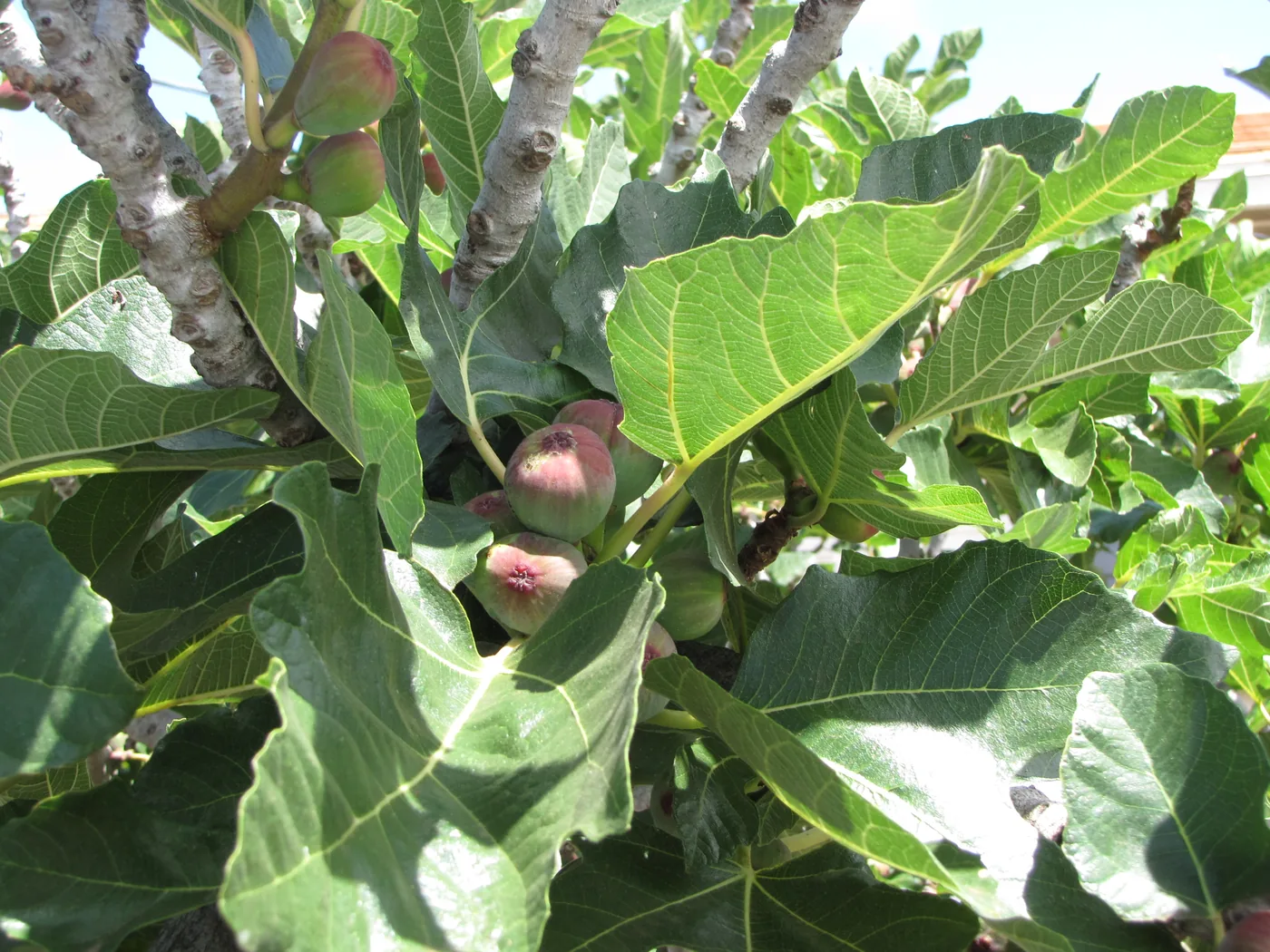

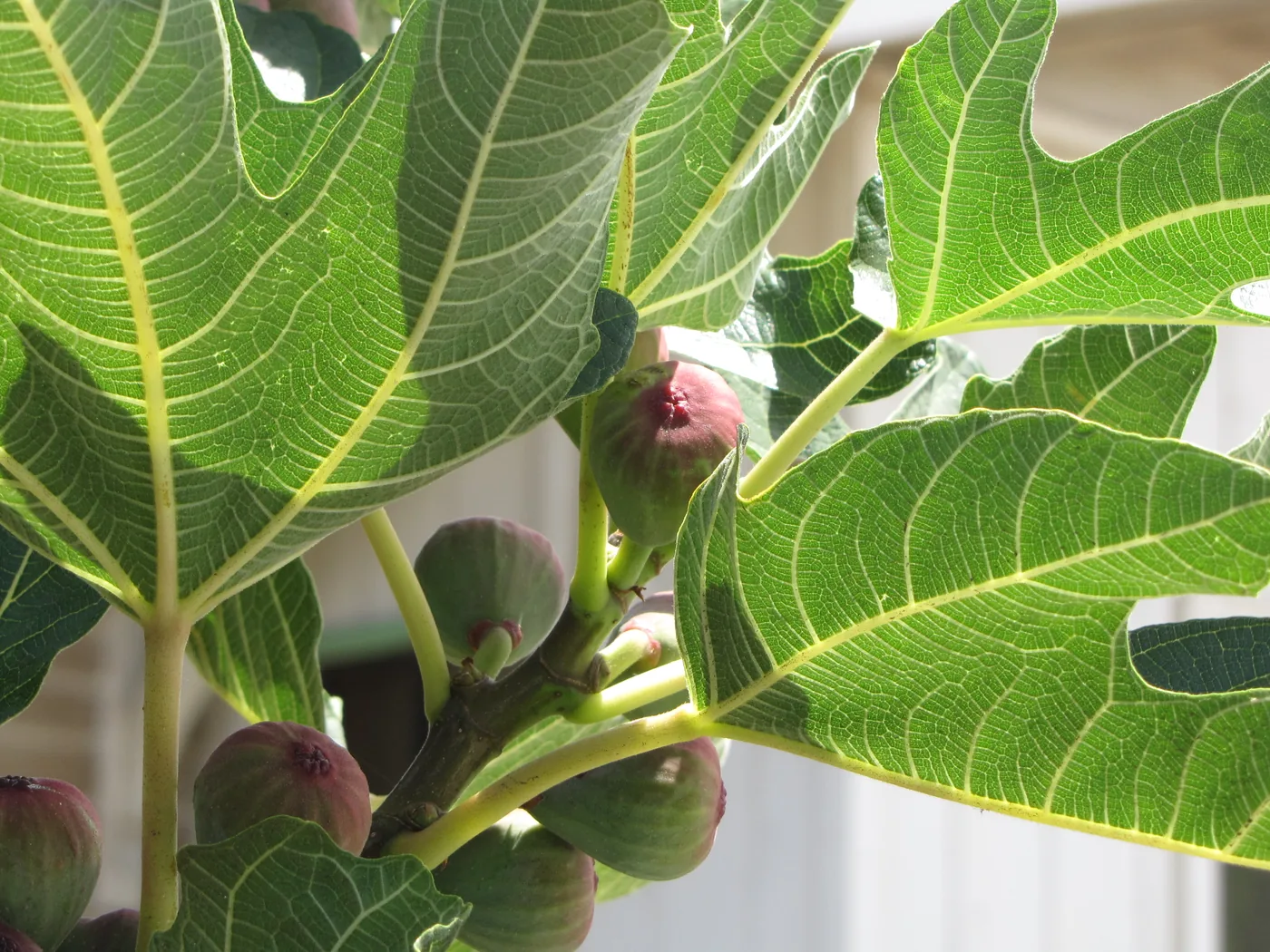
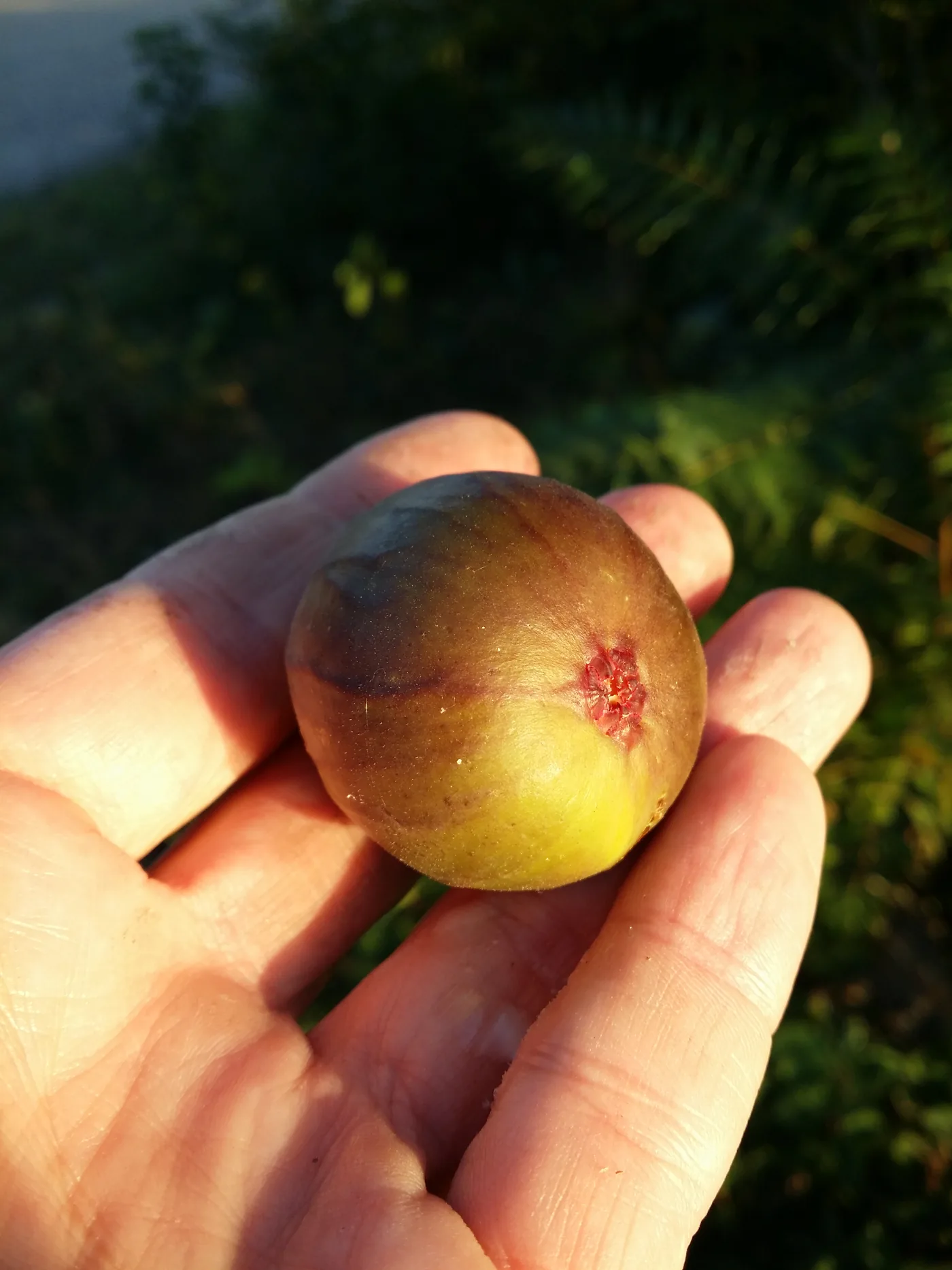
Harvest in the cool of the morning. A ripe fig hangs its neck, softens at the tip and gives a little when squeezed, and the skin takes on the deep color of its variety. A drop of nectar at the eye is a good sign. Cut or twist the fruit from the stem with a gloved hand, and drop it gently into a shallow container.
The timing depends on the variety and the year. The first crop comes in late spring, and in 'Celeste' it is often mid to late June. 'Texas Everbearing' keeps ripening from June through August, and many varieties give a bigger crop from late summer through fall.
Eat the fruit within a day or two, refrigerate it for a short time, or freeze or dry the surplus. A fig is 79 percent water, which is why it spoils so fast and why the extraction guide on our partner site begins with juicing and drying.
Safety
The fig is a friendly tree, and it still carries a few hazards that a grower should know. The white sap in the leaves, stems and unripe fruit contains psoralen and bergapten, two furanocoumarins. They make skin react to ultraviolet light, and the result is phytophotodermatitis, a burn with redness and blisters that appears a day or two after the sap met skin and sun.

The ripe fruit does not carry them, and the sap risk belongs to the work of pruning and harvesting leaves.
What to do
These habits keep the grower and the family comfortable around the tree.
- Wear gloves, long sleeves and eye protection when you prune, harvest leaves or handle shoots, especially on a sunny day.
- Wash your hands and tools with soap and water after any contact with leaves or sap.
- Cover any skin the sap touched and stay out of direct sun for 48 hours.
- Try a small piece of fruit before you eat a large amount if you have never had fig, because allergy has been reported.
- Check with your doctor before you use fig leaf tea if you take diabetes medicine or warfarin.
- Keep young children away from pruning work, and rinse any sap from the eyes with plenty of water.
Allergy to the fruit is rare, but it is real. Case reports describe severe reactions after a single fig, and researchers link fig allergy to the weeping fig, Ficus benjamina, a common houseplant. Ficin, an enzyme in the latex, is the main fig allergen.
What not to do
Each item here has cost a grower a sore week or a ruined tree.
- Never rub your eyes or face while you work with leaves or sap.
- Avoid pruning in shorts and short sleeves, because the sap soaks into bare skin.
- Skip the tanning bed, the lake and the long afternoon in the sun after any sap contact.
- Never let children or pets chew on stems or leaves.
- Leave fig leaf and latex preparations alone if you have a latex or fig allergy.
- Avoid burning the prunings in a closed room, and never promise anyone that a leaf tea treats a disease.
The leaf has been tested as a tea for blood sugar, and the trials are small. Any leaf preparation belongs in the hands of an adult whose doctor knows about it. The extraction guide on our partner site covers the preparation in full.
Troubleshooting
Most fig problems have a plain cause, and the usual ones are in this list.
| What you see | The usual cause | What to do |
|---|---|---|
| Brown leaves with orange spots underneath | Fig rust, worst in wet weather | Rake and destroy fallen leaves, apply copper at the first sign |
| A tree that declines slowly, with swollen roots | Root-knot nematodes in sandy soil | Replant nematode-free stock in clean soil |
| Mottled leaves and misshapen fruit | Fig mosaic virus | No cure, so buy inspected stock |
| Fruit sours or splits | An open eye in a wet year | Choose a closed-eye variety |
| Dead tops in spring | Freeze injury | Wait for new shoots, then keep five or six |
| Many leaves and no figs | Too much nitrogen or too heavy pruning | Cut back the feed and prune lightly |
| A red, blistered patch on the skin | Sap plus sunlight | Wash, keep out of the sun and see a doctor if it blisters |
If a problem is not on the list, look at the roots, the soil moisture and the weather of the past two weeks before you reach for a spray.

Write down what you find, even when the answer is nothing, since a notebook turns a bad year into a lesson.
Making Something of the Harvest
A tree this generous leaves you with more fruit than you can eat, and the surplus is the raw material for juices, powders and leaf teas. Our partner website has the full extraction guide, with both juice routes and the cautions that go with them.

Your own tree lets you harvest at the moment you choose and keep a record from tree to jar.
Our partner website, Pure Extracts
Fig (Ficus carica) Extraction Guide: Ultrasonic Soaks, Juice, Leaf Decoction and Sap
Fig (Ficus carica) extracts: quick ultrasonic soaks, rotary evaporator, heptane and butane safety, juice routes, leaf decoction.
References
- Antioxidant activities and anthocyanin content of fresh fruits of common fig, Journal of Agricultural and Food Chemistry (2006): Mission highest in polyphenols, flavonoids and anthocyanins.
- University of Tennessee Gardens, Common Fig: Chicago Hardy cold tolerance, short season fruiting on new wood.
- Texas A&M AgriLife Extension, Texas Fruit and Nut Production: Figs (EHT-019): climate, varieties, propagation, planting, pruning, freeze protection, diseases, pests, harvest.
- Wikipedia, Common fig: size, two crops, propagation, latex, psoralen and bergapten, nutrition.
- Fig allergy case report with house dust mite cross-reactivity and the role of ficin, Clinical and Molecular Allergy (2020).
- Immediate anaphylaxis after the ingestion of fig fruit (Ficus carica), Clinical and Translational Allergy (2015).
- Phytophotodermatitis from fig, case report, Dermatology Online Journal: furocoumarins in leaf and shoot sap.
- Effect of fig leaf decoction on glycemic control in type 2 diabetes, a double-blind crossover trial (2016), Jundishapur Journal of Natural Pharmaceutical Products.
- Georgia Extension, Home Garden Figs (C 945): stem cuttings from one-year-old wood, 8 to 10 inches.
- North Carolina Extension, Fig Culture in North Carolina: feeding rate by tree age.
- Stark Bros., Winter preparation for fig trees: cutting back and mulching.
- University of Tennessee Extension, Figs (SP307-I): mulch or soil mound over the base for winter.
Common questions
What is fig?
A fig tree is one of the few fruit trees that will forgive a beginner. Root a cutting in spring, plant it out once it is fully rooted, keep it watered, and by the end of the season you have a shrub with leaves the size of a dinner plate. Two or three years on, it hands you more fruit than a family can eat in a week. We grow figs on our family farm in Kerrville, in the Texas Hill Country, where winters can bite and summers bake. The tree we take our clones from stands in the ground, is over 15 feet tall, and is cut back every year before winter, with mulch piled over its base to protect it.
How do I grow fig?
Left alone, a common fig grows as a spreading, many-trunked tree up to about 20 feet tall. Its roots are shallow and fibrous, which makes it quick to establish and sensitive to drought. The leaves are large, lobed and rough, and they release a milky sap when torn. The tree makes two crops. A first crop forms on last year's wood and ripens in late spring.
What climate does fig tolerate?
Figs are generally limited to places where winter temperatures stay above 5 °F, and stem tissue can be injured well before that. In a winter with long cold, mature trees survive the low teens. Dry winters, and trees that never had time to harden off in fall, can suffer severe damage at warmer readings. A freeze that kills the top of the tree does not always kill the tree. A fig frozen to the ground usually sprouts a crowd of new shoots from the roots, and it can bear a late crop on them the same summer.
How do I choose a variety?
Only the common fig is grown in Texas and the other Gulf states, and three standard varieties have served the South for decades. Four more have earned a trial planting beside them. For the Hill Country we would start with 'Celeste', since it appears to be the hardiest fig evaluated in Texas and it ripens in June, well before most others. 'Texas Everbearing', also sold as 'Brown Turkey', gives a reliable crop almost every year and keeps producing through August, and it makes a fair to good crop on new growth after a severe freeze. 'Alma' is rich and sweet, but it belongs within about 200 miles of the Gulf.
How do I propagate fig?
Figs are among the easiest fruit crops to propagate, and that is how we make every new tree. We take clones from the mother tree, so each new tree is a copy of one we already know. Our rule is simple: the cutting is rooted fully, in spring, before it is planted anywhere. Georgia extension advice for cuttings is to take them from one-year-old wood, 8 to 10 inches long, because tips and soft growth do not root well. The steps below follow that advice.
How much water does fig need?
It has big leaves, shallow roots and fast growth, and in a Hill Country summer it will empty a pot or a bed quickly. Often does not mean soggy: the mix or the soil has to drain freely, and the water has to reach the whole root zone each time. A thick layer of organic mulch pays for itself here. Spread wood chips, shredded leaves or hay over the root zone, and pull it a few inches back from the trunk so the bark stays dry. The first two years are the ones that decide the tree.
What is protecting the tree from a freeze?
How well a fig survives cold depends on its variety, its soil moisture and how well it was conditioned for cold. Mature trunks stand up to sustained temperatures near -8 °C (17 °F), and young plants and tender trunks fall to much less. Our own method is to cut the tree back before winter and mulch over its base. Extension guides describe the same idea: Stark Bros. advises mulch 12 to 20 inches deep over the base and the stubs after leaf drop, and the University of Tennessee suggests a heavy mulch or a mound of soil around the base in late fall.
What pests and diseases affect fig?
The fig is one of the most trouble-free fruits in a mild climate, and its troubles are few and well known. Fig rust, caused by Cerotelium fici , is the greatest disease threat to figs in Texas, and it is worse in rainy seasons and rainy places. Infected leaves turn brown and grow orange spore structures on the underside. Badly hit leaves fall early, which weakens the tree and leaves it unable to ripen the crop. Rake up and destroy fallen leaves, since the spores overwinter there.
What is a year with the tree?
Keeping the calendar in mind makes the work lighter, because a fig asks for something different each season. This is how our year runs, from the coldest month onward; winter: the mother tree sleeps under its mulch. Check the mulch and the cages after each hard freeze. Late winter: plant bare-root trees, cut them back by a third, and take wood for cuttings from the mother tree.
What soil does fig need?
Good drainage matters more than rich soil. A fig in heavy clay that holds water through winter loses roots to rot, and a fig in loose sand loses them to nematodes. The best ground is loam that drains within an hour of a heavy rain, with a surface layer of mulch that keeps the shallow roots cool. Raise the planting spot a few inches if your ground stays wet, and add compost to the backfill in a modest amount. Do not bury the trunk in compost, because a trunk that stays wet invites rot and gives borers a way in.
What has fig traditionally been used for?
Figs are believed to be native to western Asia, and people have prized them since ancient times. They reached California from Spain in the mid 1700s and spread from there to the warm parts of the country east of the Rockies. The tree grows from sea level to about 5,600 feet in its home range, which tells you it is an adaptable species. Commercial fig growing in Texas has been largely unsuccessful. Small plantings by a house are another matter, and a family tree can supply a kitchen.
How do I use the crop?
Fresh figs are best eaten the day they are harvested. For the rest, 'Celeste' has a name as a processing fig, frozen whole or cooked into preserves, and every variety can be dried. Spread cut figs on trays in a dehydrator or a low oven until leathery, and store them in airtight jars in a cool, dark place. Weigh what you harvest, and note the date and the variety in a notebook. After two seasons, those notes tell you more about your tree than any guide can, and they show you which branches carry the best fruit.
What are the two crops?
A common fig can carry two crops in a year, and knowing which is which saves a lot of worry. The first crop, often called the breba crop, starts on last year's wood and ripens in late spring. The second, the main crop, forms on the current season's growth and ripens from late summer through fall. A freeze decides which one you get. If last year's wood survives, you harvest in June and again in the fall.
When should I harvest fig?
A fig does not ripen after it is harvested. It sweetens on the tree or not at all, and then it spoils within a few days. That single fact decides how you harvest; harvest in the cool of the morning. A ripe fig hangs its neck, softens at the tip and gives a little when squeezed, and the skin takes on the deep color of its variety.
Is fig safe?
The fig is a friendly tree, and it still carries a few hazards that a grower should know. The white sap in the leaves, stems and unripe fruit contains psoralen and bergapten, two furanocoumarins. They make skin react to ultraviolet light, and the result is phytophotodermatitis, a burn with redness and blisters that appears a day or two after the sap met skin and sun. The ripe fruit does not carry them, and the sap risk belongs to the work of pruning and harvesting leaves. These habits keep the grower and the family comfortable around the tree.
Browse by topic
More guides to explore
 GrowingDragon Fruit Cultivation Guide
 GrowingTexas Persimmon Cultivation GuideExtractionAbsinthe Wormwood Cultivation Guide
 GrowingDamiana Cultivation Guide
 GrowingCitronella Grass Cultivation Guide
 GrowingChamomile Cultivation Guide
 GrowingCats Claw Cultivation Guide
 GrowingCalendula Cultivation Guide
 GrowingAgarita Cultivation Guide
 GrowingAloe Vera Cultivation Guide
 GrowingAshwagandha Cultivation Guide
 GrowingBacopa Monnieri Cultivation Guide